







What Is Kyphosis?
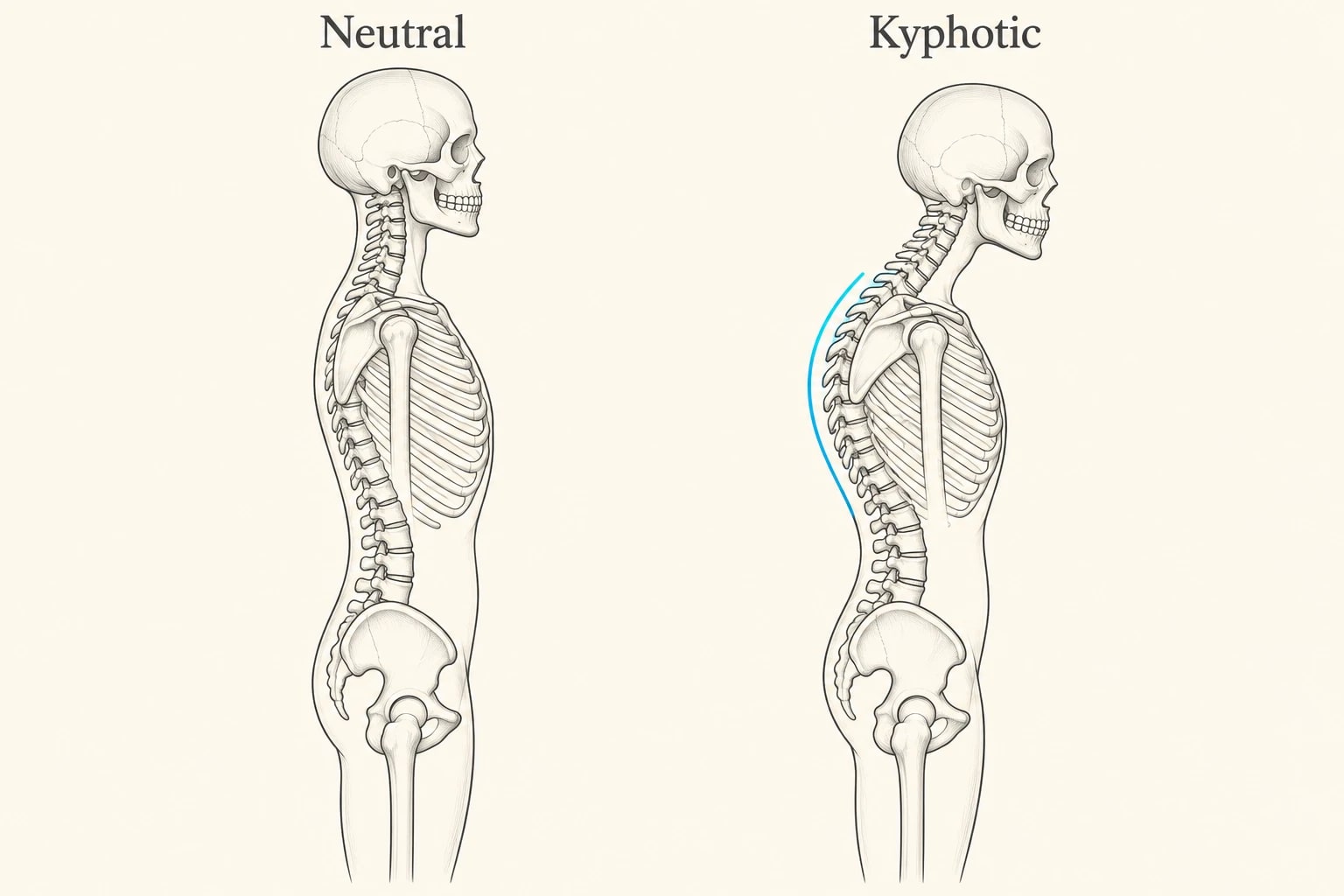
Kyphosis is the medical term for an excessive forward curvature of the thoracic spine, the upper and mid back. Some degree of thoracic curve is completely normal; the spine is designed to have gentle natural curves throughout its length. Kyphosis refers to a curve that has become exaggerated beyond that range, typically defined as greater than 40 to 50 degrees of curvature when measured on imaging.
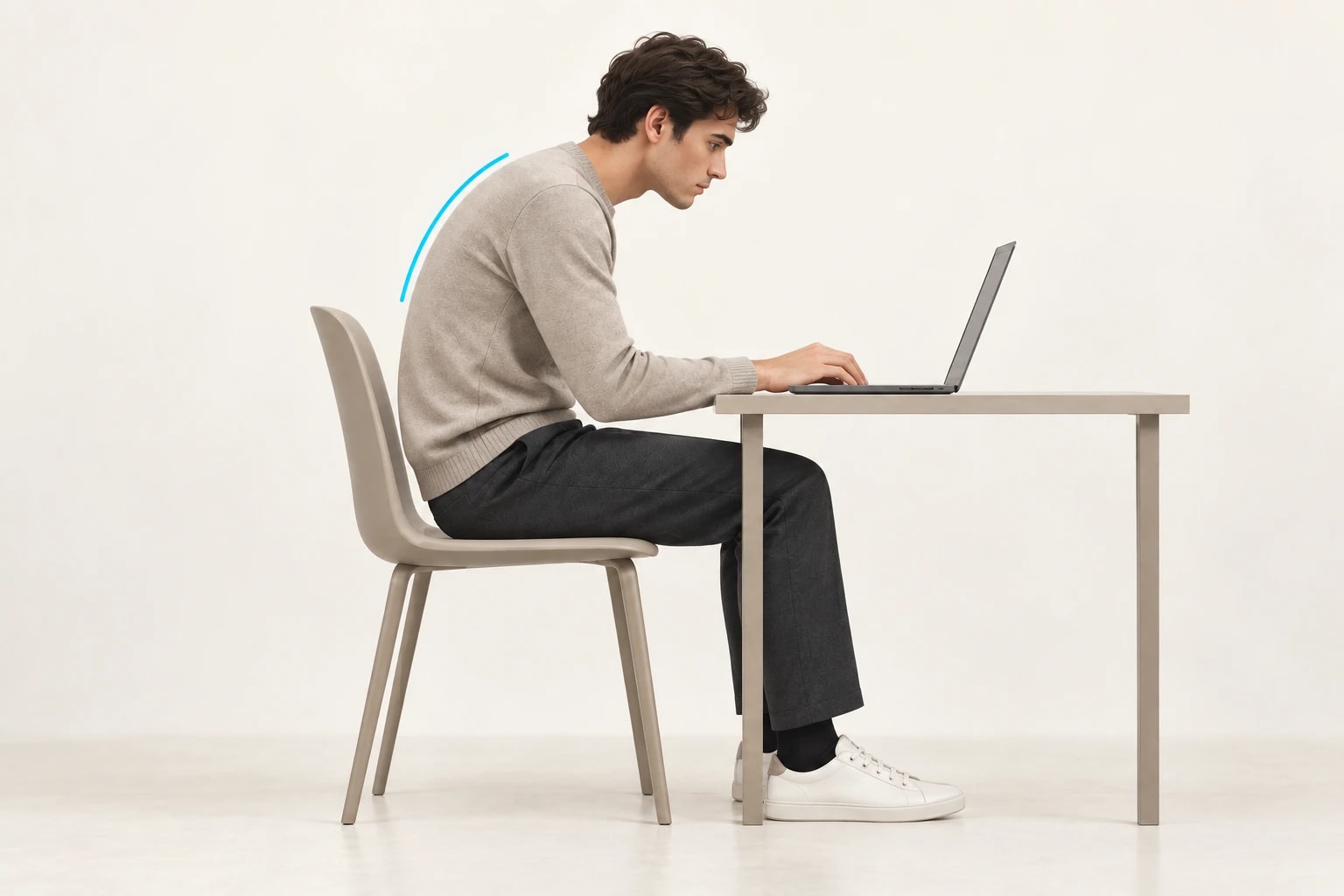
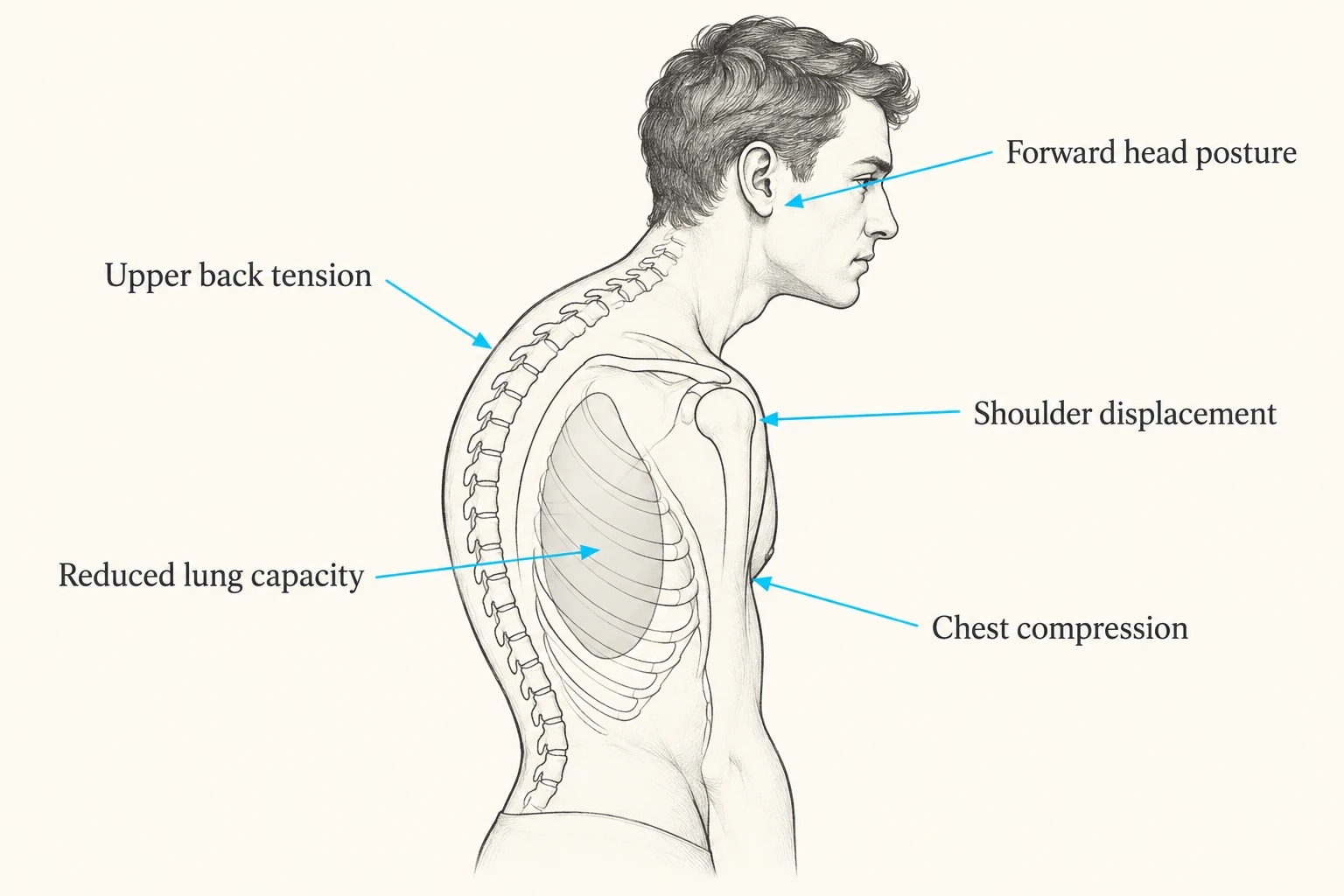
In practical terms, it presents as a visibly rounded upper back, often accompanied by rounded shoulders, a forward head position, and a flattening or loss of the natural chest curve. The person may find it difficult to stand fully upright and may notice the rounding is more pronounced after time spent sitting.
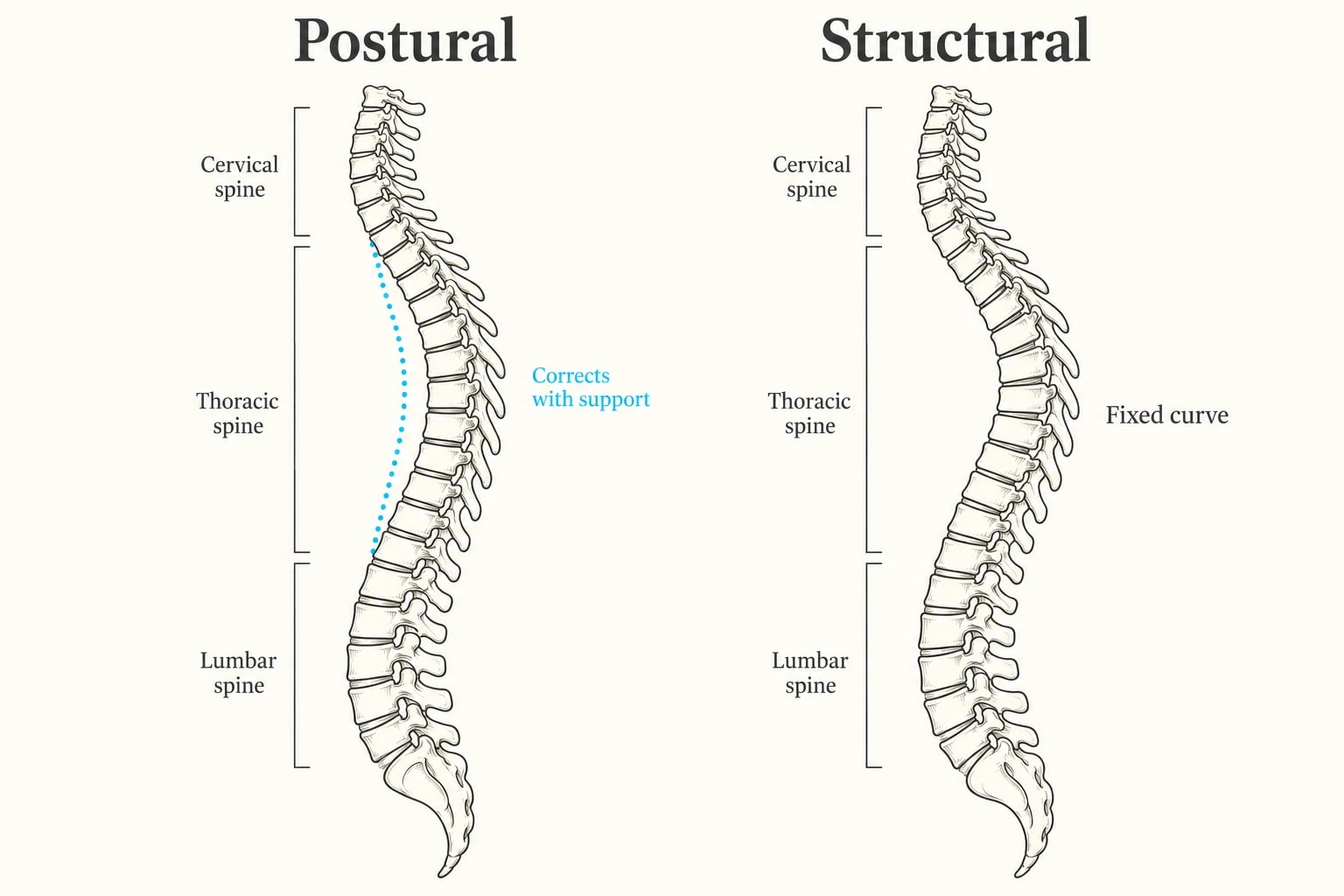
It's worth distinguishing between two broad categories, because they have meaningfully different implications:
- Postural kyphosis develops from habitual positions, muscle imbalances, and environmental factors, like spending years at a desk without adequate spinal support. The spine itself retains its flexibility; the rounding is driven by the soft tissue surrounding it. This form is the primary focus of this article, and it is the type most commonly associated with desk work.
- Structural kyphosis involves actual changes to the shape of the vertebrae, whether from conditions like Scheuermann's disease, spinal fractures, osteoporosis, or degenerative disc changes. The curvature here is driven by the bones themselves and does not fully correct with stretching or position changes. Anyone who suspects structural kyphosis should work directly with a healthcare provider.
Note: This article addresses postural kyphosis related to desk work and habitual positioning. It is not intended to address structural forms of kyphosis, which require professional medical evaluation and management.
Why Sitting Promotes Kyphosis
Postural kyphosis doesn't develop from a single bad day at the desk. It accumulates over months and years of hours spent in a position that the body gradually accepts as normal. Several forces are working together to push the upper back into rounding.
Muscle Imbalances That Drive the Curve
The thoracic spine is surrounded by muscles that, when balanced, keep it upright. In a desk environment, that balance is rarely maintained. The pectoral muscles across the chest, the upper trapezius, and the anterior neck muscles all tend to shorten and tighten in a seated, forward-reaching position. Meanwhile, the thoracic extensors, rhomboids, middle and lower trapezius, the muscles responsible for holding the shoulder blades back and the upper back upright, become progressively overstretched and underused.
As this imbalance deepens, the rounding becomes increasingly difficult to reverse through willpower alone. The shortened chest muscles actively pull the upper back into flexion. The weakened back muscles lack the endurance to resist. The curve becomes the path of least resistance.
Sustained Flexion Adapts the Soft Tissue
Spinal ligaments, tendons, and the intervertebral discs all respond to the positions they are habitually held in. Hours each day in a rounded position gradually shifts the resting tension of these structures, the ligaments along the back of the thoracic spine lengthen and lose their elastic recoil, while those at the front shorten. Over time, the soft tissue itself begins to hold the rounded position even when the person is not actively sitting.
Fatigue and the Afternoon Collapse
Sitting upright, even in a relatively neutral position, requires sustained effort from the postural muscles of the upper back. As these muscles fatigue through the day, the upper back progressively rounds. For many desk workers, posture is noticeably more upright at 9am than at 3pm. Not because they stopped trying, but because the muscles responsible for maintaining it have simply run out of endurance. Without external support for the thoracic spine, fatigue reliably produces rounding.
Chair Design That Leaves the Upper Back Unsupported
Most standard office chairs are designed with lumbar support in mind but give relatively little consideration to the thoracic spine. A chair that supports only the lower back leaves the mid and upper back to manage on their own, which, as fatigue sets in, they increasingly fail to do. Some chairs actively push the mid-back forward through a poorly contoured backrest, accelerating the rounding they should be preventing. The result is a chair that supports sitting, but not good spinal alignment during sitting.
The Head and Shoulders Follow
As the upper back rounds, the head migrates forward, and the shoulders roll inward to follow the curve of the thoracic spine. This is why kyphosis, forward head posture, and rounded shoulders so frequently appear together. They are part of the same postural chain. Addressing only one without the others rarely produces lasting change.

How Kyphosis Affects the Body
The effects of an exaggerated thoracic curve are not limited to appearance or the discomfort of bad posture. The thoracic spine is the attachment point for the rib cage, the passageway for major nerves, and the structural backbone for the entire upper body, meaning changes in its curvature affect a wide range of systems. The following are commonly associated patterns; individual experience varies, and any persistent symptoms should be evaluated by a healthcare professional.
Upper Back Pain and Muscular Fatigue
The most immediate and common effect is discomfort in the upper back, between the shoulder blades, and across the posterior shoulders. The muscles that are chronically overstretched, the rhomboids, mid trapezius, and thoracic extensors, accumulate tension and fatigue that often presents as a dull, persistent ache. Many desk workers describe this as the feeling of carrying a weight across the upper back by late afternoon, and it is a direct consequence of muscles being held in a mechanically disadvantaged position for too long.
Reduced Breathing Capacity
This is one of the less obvious but well-documented effects. The thoracic spine is the attachment point for the ribs, and an exaggerated forward curve reduces the mobility of the rib cage and the volume of the chest cavity available for lung expansion. Research published in The Framingham Study found a meaningful relationship between kyphosis severity and decline in pulmonary function. In practical terms, a person with pronounced kyphosis cannot take as deep a breath as they could in a neutral position. This can contribute to lower energy levels, reduced mental clarity, and a general sense of fatigue through the day.
Neck and Shoulder Pain
Because the thoracic spine is the foundation for everything above it, a rounded upper back displaces the shoulder joints forward and the head forward of the spine. This forces the neck extensors and upper trapezius to work harder to keep the head upright, generating the chronic neck tension and shoulder tightness that accompany so many cases of desk-related kyphosis. The headaches and stiffness many people attribute to "screen time" are often downstream effects of the thoracic rounding that drives the whole chain.
Nerve Irritation and Radiating Symptoms
The thoracic spine houses the spinal cord and the nerve roots that supply the chest wall, upper abdomen, and in some cases contribute to arm symptoms. In more pronounced cases of kyphosis, increased compressive and tensile forces on the thoracic vertebrae and discs can irritate these nerve structures. While thoracic nerve compression is less common than cervical or lumbar, it is a consideration in long-standing, more pronounced kyphosis - particularly when accompanied by numbness, tingling, or changes in sensation.
Impact on Confidence and Energy
Research has found associations between a rounded, collapsed posture and self-reported mood, confidence, and energy levels. While the direction of causality is complex, there is evidence that the physical position of the body influences not just how we are perceived, but how we feel. The physical fatigue of holding a poorly supported spine through a long workday compounds this. People with significant desk-related kyphosis often report feeling more tired than their workload alone would explain.
What Can Help
Postural kyphosis is generally considered one of the more responsive postural patterns to lifestyle intervention. The soft tissue is flexible, and the curve is driven by factors that can be changed. As with the other postural patterns discussed in this series, meaningful improvement typically requires working on multiple fronts simultaneously: muscle rebalancing, environmental adjustment, and support during the hours spent sitting.
Strengthen the Thoracic Extensors and Mid-Back
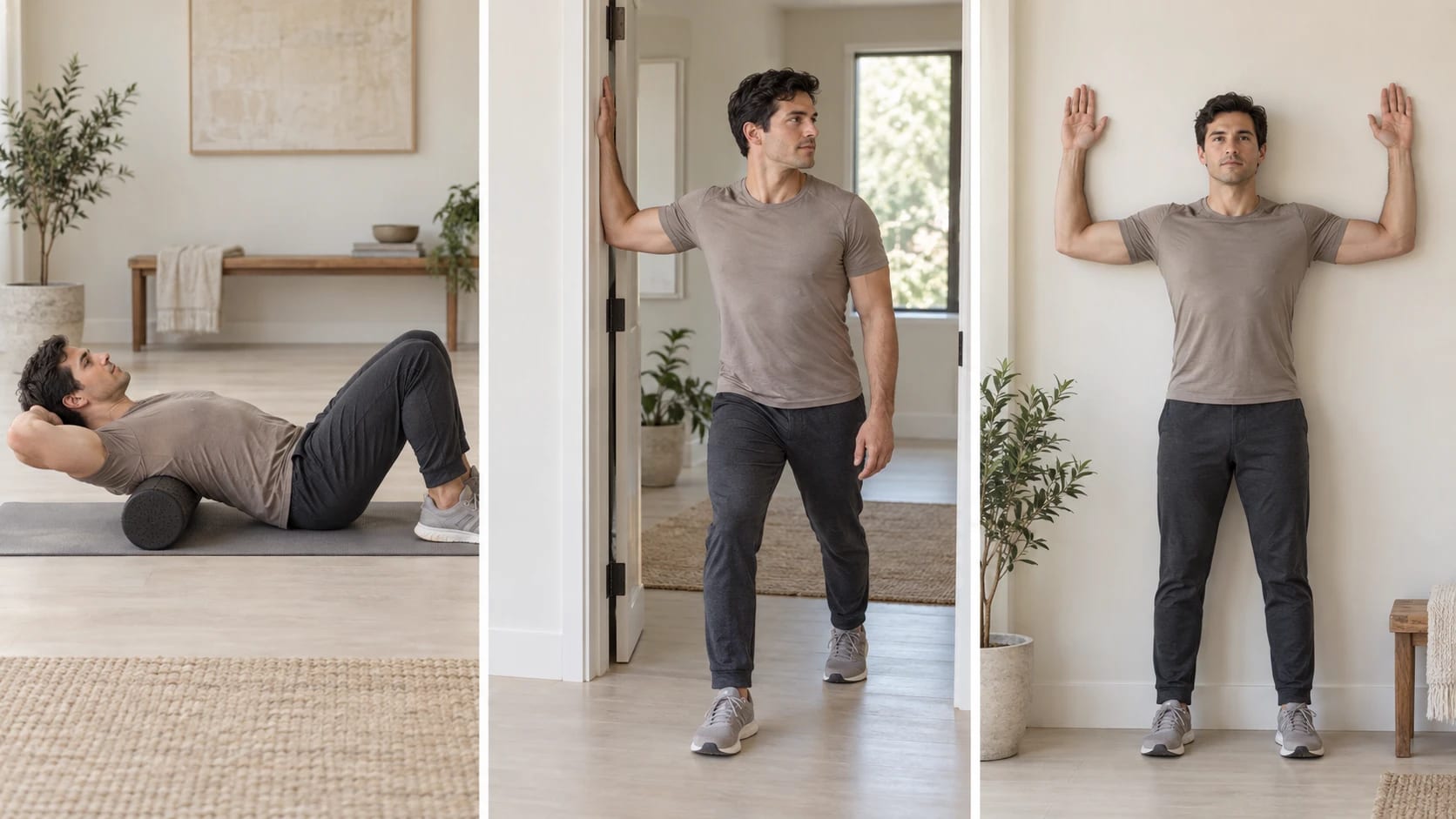
The most direct way to counteract the forward pull of the chest muscles is to strengthen what's pulling in the opposite direction. Exercises that activate the thoracic extensors and mid-back stabilizers- rows (seated, cable, or banded), face pulls, wall slides, and scapular retraction exercises- build the endurance needed to sustain an upright upper back through a long day. Foam roller thoracic extensions, where a foam roller is placed horizontally under the mid-back and the spine is gently extended over it, are also widely used to mobilize the thoracic curve in the opposite direction.
Open the Chest
The shortened pectoral muscles and anterior shoulder structures that pull the upper back into rounding need to be lengthened regularly to reduce their grip on the thoracic spine. Doorway chest stretches, chest openers on a foam roller, and thoracic extension mobility work can help restore the range of motion that has been progressively lost. Stretching alone won't resolve kyphosis, but combined with strengthening, it removes one of the key forces maintaining the curve.
Address the Full Chain
Because kyphosis rarely exists independently of forward head posture, rounded shoulders, and posterior pelvic tilt, exercises that address only the thoracic spine will have limited long-term effect. Strengthening the glutes and deep abdominals, addressing hip flexor tightness, and reactivating the deep cervical flexors all contribute to creating the postural foundation on which a more upright thoracic spine can be maintained. The body is a chain; isolated corrections tend to migrate back when the rest of the chain is unchanged.
Adjust the Workstation
The same workstation principles that apply to other desk-related posture patterns apply here, because the root environmental drivers are the same:
- Monitor height at or slightly below eye level, so the head doesn't drop and pull the upper back into rounding in order to see the screen.
- Desk height set to allow the forearms to rest parallel to the floor with elbows at 90 degrees. Reaching upward to a high desk rounds the upper back and shoulders.
- Keyboard and mouse positioned close to the body by sitting close to the desk, so the arms don't reach forward and protract the shoulder blades away from the spine.
Want a step-by-step walkthrough for your own desk? Our free guide covers monitor height, desk height, and chair setup in one sitting.
Try the 6-Minute Workstation FixMove Regularly
Static sitting in any position, even a good one, allows the postural muscles to fatigue and the soft tissue to adaptively shorten. Building in movement breaks every 30 to 45 minutes, even briefly, gives the thoracic extensors a chance to reset and interrupts the progressive rounding that accumulates through long unbroken sitting sessions. A few thoracic extension movements or shoulder blade squeezes between work blocks can make a meaningful difference to how the upper back feels by end of day.
How Seating Design Plays a Role: The Anthros Chair
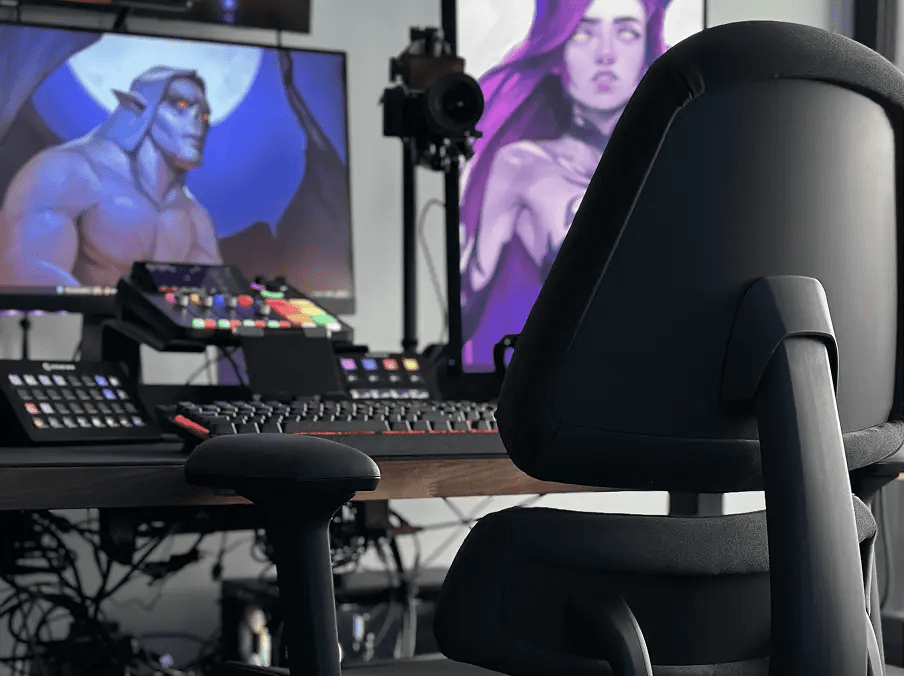
For postural kyphosis specifically, the chair is not a secondary consideration, it is central to the problem. The thoracic spine spends more hours in a chair than in almost any other single position during the day. A chair that fails to support it, or that actively encourages rounding through its design, is working directly against any effort made to improve the pattern. A chair built to support the thoracic spine changes the daily equation significantly.
Starting at the Foundation: The Precision Posture System
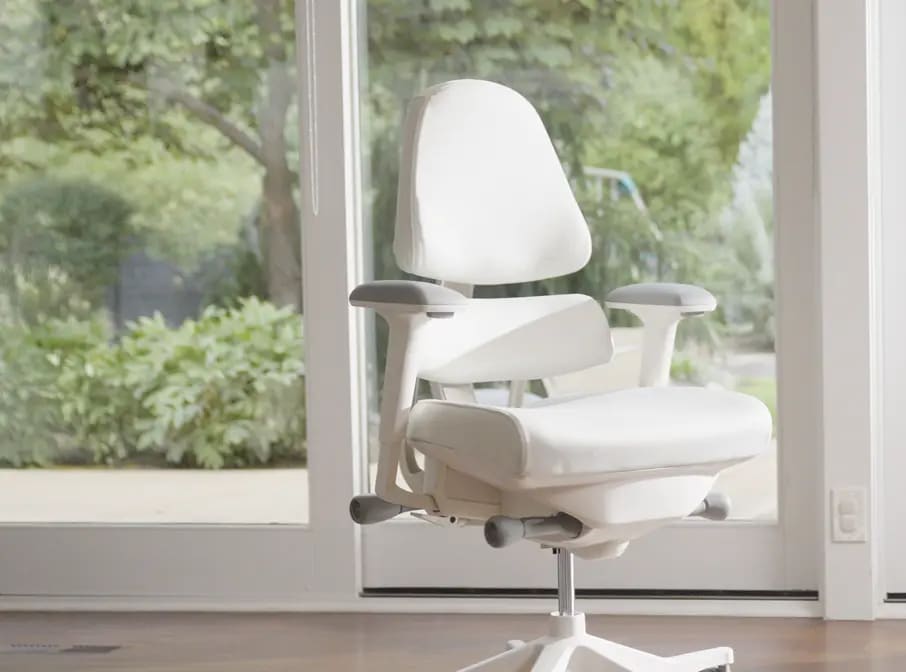
The Anthros chair addresses posture from the bottom up through its Precision Posture System, a two pad back support that begins with pelvis positioning.
- The lower pad functions as a pelvis support, holding the pelvis in a neutral position and re-establishing the natural lumbar curve. When the lumbar curve is restored, the thoracic spine can stack more upright above it. When the thoracic spine is upright, the shoulders have a stable, neutral platform to sit on. And when the shoulders are in the right position, the head no longer has the same structural pull drawing it forward.
- The upper back pad then comes forward to provide balanced support to the thoracic spine, the region where rounding and collapse most commonly happen later in the day when fatigue sets in. Three specific design details address the thoracic spine in ways that matter directly for a hunched, kyphotic posture:
- Sustained contact that comes forward to meet the spine. Because the upper back pad moves toward the spine rather than waiting for the person to lean back into it, it maintains consistent contact throughout the workday. This sustained support is what prevents the thoracic collapse that most desk workers experience by afternoon, while maintaining an aligned and stacked spine.
- A tapered shape that frees the shoulders. The upper back pad narrows toward its upper edges, allowing the shoulders to retract naturally without being crowded forward by the backrest. When the shoulders are free to sit in a neutral position, they can stay rolled back, which removes one of the primary structural pulls that drags the thoracic spine into rounding.
- A hinge mechanism that supports thoracic extension. The upper back pad incorporates a hinge that allows it to move with the thoracic spine as the body naturally shifts through the workday. Rather than locking the spine against a rigid surface, the hinge accommodates movement while maintaining support, keeping the thoracic spine in a better, more extended position and preventing the progressive drift into flexion as the day goes on.

Adjustability: Making the Support Work for Each Individual
Kyphosis varies significantly in where it is most pronounced, how severe it is, and what proportions the person has. A back support that is positioned too high or too low will miss the thoracic spine and lose its effectiveness entirely. The Anthros chair's adjustability, across seat height, back support position, and tilt, allows the chair to be configured to make genuine contact with the thoracic spine of the specific person sitting in it, not a statistical average. For someone working to reduce the daily reinforcement of a kyphotic curve, this precision in fit is the difference between a chair that helps and one that doesn't.
The 5° Rearward Tilt: Letting Gravity Work for the Spine Instead of Against It
One of the primary mechanisms driving kyphotic collapse through the workday is gravity combined with postural muscle fatigue. As the thoracic extensors tire, they can no longer hold the upper back upright against the constant downward and forward pull. The body collapses into the rounding, and the process accelerates.
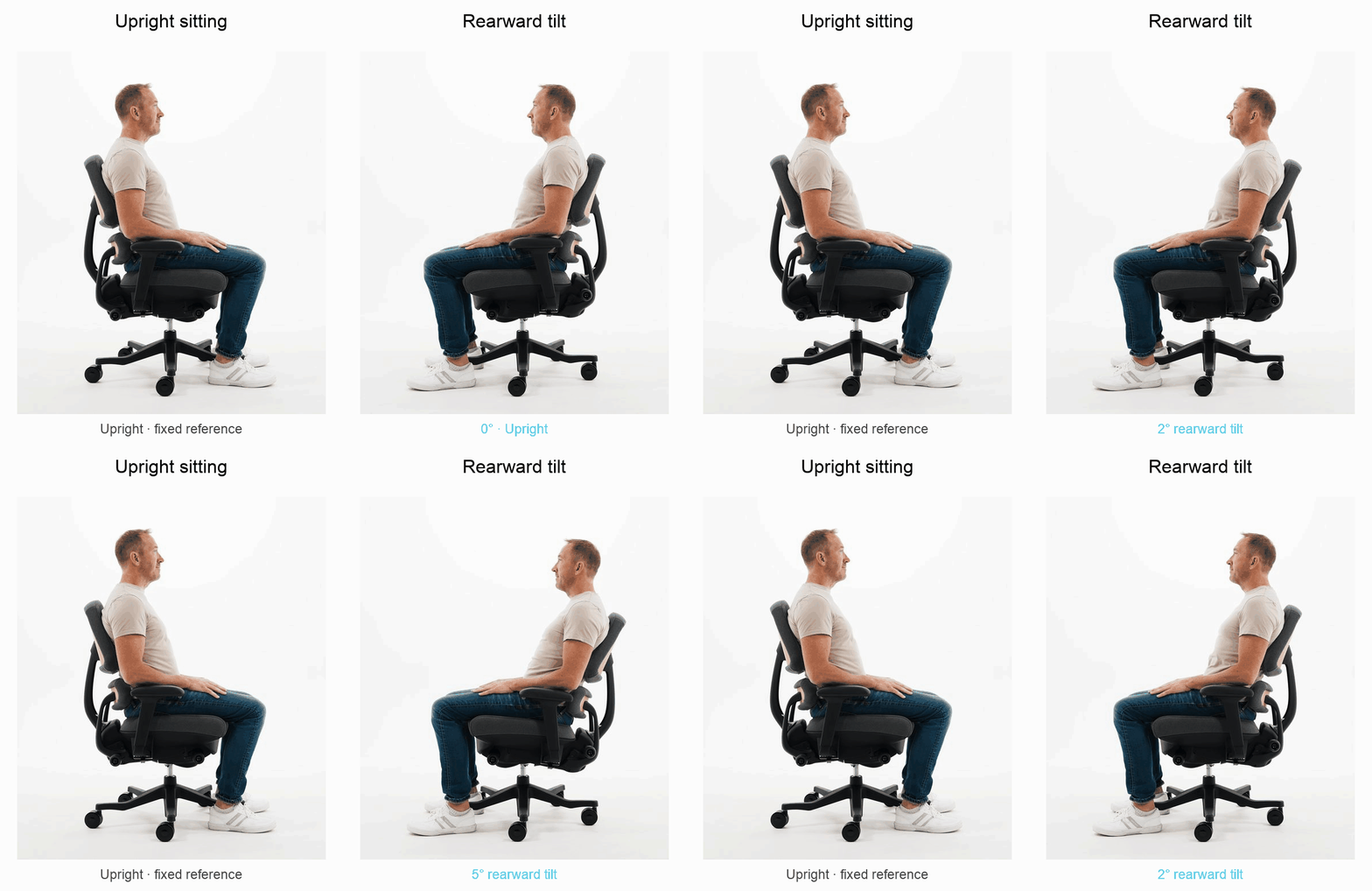
The Anthros chair's 5° rearward tilt addresses this directly. When the seat and back move together as a unit to tilt slightly backward, the center of gravity shifts rearward. The body is no longer fighting the full forward pull of gravity in order to remain upright. The gravitational load that was accelerating the collapse of the thoracic spine is taken off the table. The body can settle into the chair's support, the Precision Posture System holds the spine in alignment, and the postural muscles that were working so hard to resist gravity can operate at a lower, more sustainable level of effort.
For someone with a kyphotic tendency, this distinction is significant. It means that the rounding that typically sets in by mid-afternoon, driven by muscle fatigue against gravity, is interrupted by a chair that removes the gravitational fight rather than simply providing a surface to collapse against. The upper back stays supported in a more neutral position not because of constant muscular effort, but because the chair's design has taken on that role.
The Takeaway
Kyphosis from sitting is not an inevitable consequence of desk work - it is a predictable one, given the combination of muscle imbalances, unsupported thoracic spines, and hours of sustained flexion that most desk environments create. Understanding those mechanics makes it possible to do something about them.
The most durable improvements come from addressing the problem at multiple levels: strengthening the muscles that resist the rounding, releasing those that drive it, building movement into the workday, and adjusting the chair and workstation so that the environment stops actively reinforcing the pattern. The chair you sit in is a meaningful part of that equation - one that is working on the thoracic spine for every hour of every workday, in one direction or another.
Small, consistent changes accumulate. A workday in which the thoracic spine is well-supported, gravity is working with the spine rather than against it, and the postural muscles can sustain their effort looks very different - and feels very different - from one where the upper back is left to manage on its own.
This article is intended for educational purposes only. The information provided does not constitute medical advice and should not be used as a substitute for consultation with a qualified healthcare professional. If you are experiencing pain, limited mobility, or other physical symptoms, please seek guidance from a licensed medical provider.