

HYPERMOBILITY & JOINT SUPPORT

The Office Chair Engineered for Joint Hypermobility Support

If you have hypermobile joints, including conditions such as Ehlers-Danlos syndrome (EDS) or Hypermobile Spectrum Disorder, sitting for long hours in a standard chair can be uniquely exhausting and uncomfortable. Most chairs give your joints nothing to rely on.

Sitting doesn't have to drain you. External support can make the difference.

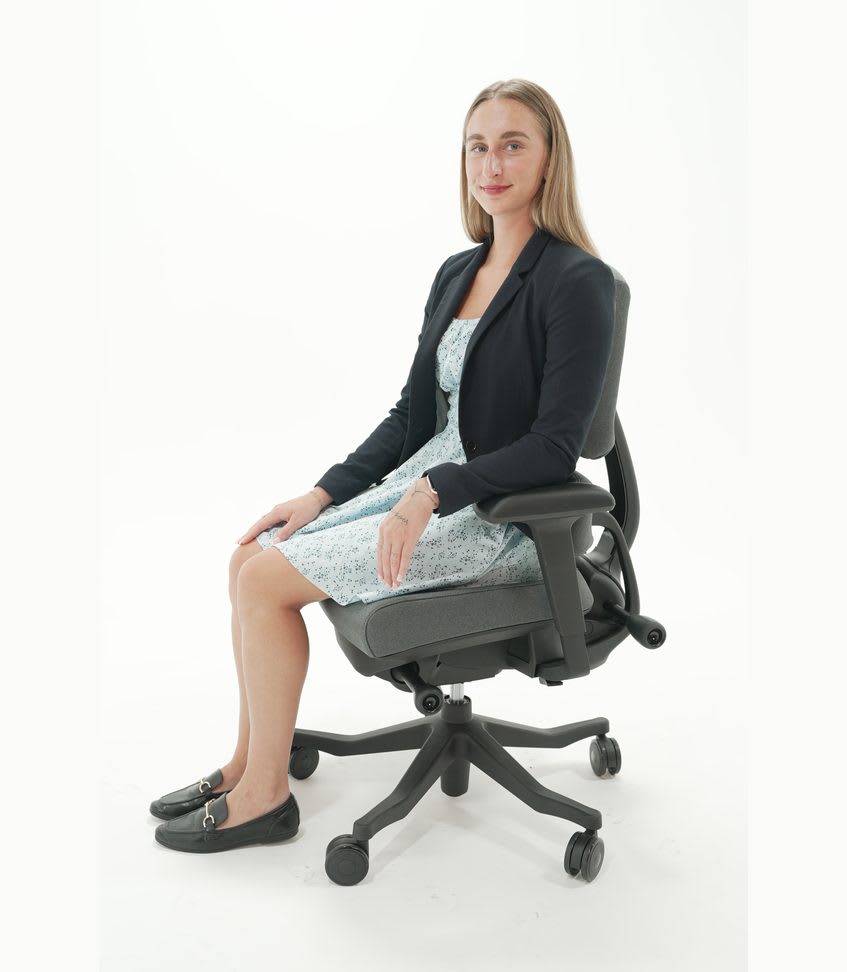
A woman sitting supported and upright in the Anthros chair, pelvis stabilized in neutral.

A note on this page: The information below is intended for general educational purposes. The Anthros chair is not a medical device and is not intended to diagnose, treat, cure, or prevent any medical condition, including Ehlers-Danlos syndrome or any related connective tissue disorder. If you have a diagnosed condition, please consult your healthcare provider about whether ergonomic seating changes are appropriate for you.

Why Sitting Can Be Especially Challenging with Hypermobile Joints

Joint hypermobility creates a unique set of challenges during prolonged sitting that standard ergonomic advice, and standard chairs, rarely address:

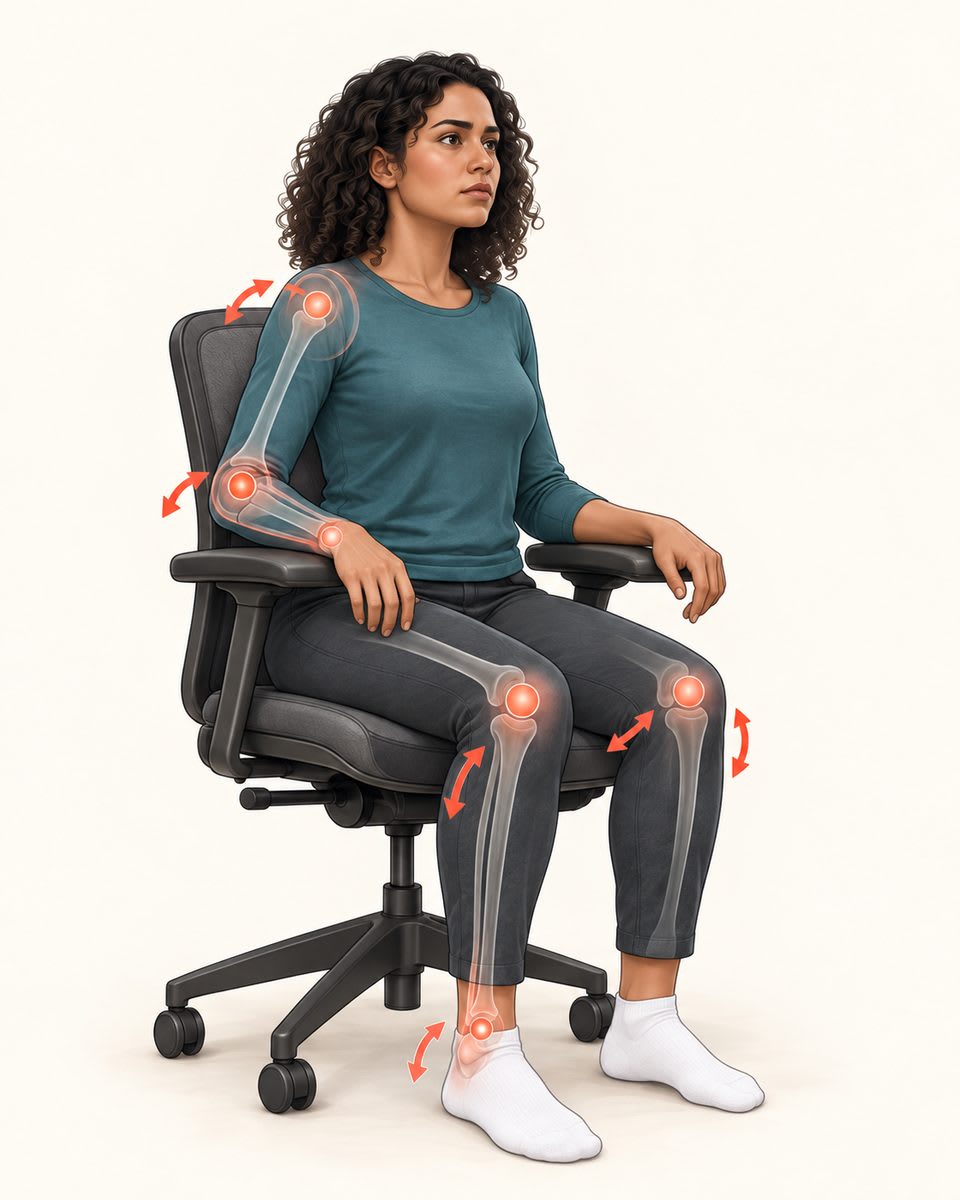
Illustration of joint instability under load: a seated person's hip and knee joints shifting out of neutral alignment without external support.

01 Joint Instability Under Load

— Hypermobile joints lack the connective tissue rigidity to hold neutral positions passively. Without external structural support, they can shift into ranges that place stress on surrounding muscles, tendons, and nerves — especially during prolonged sitting.
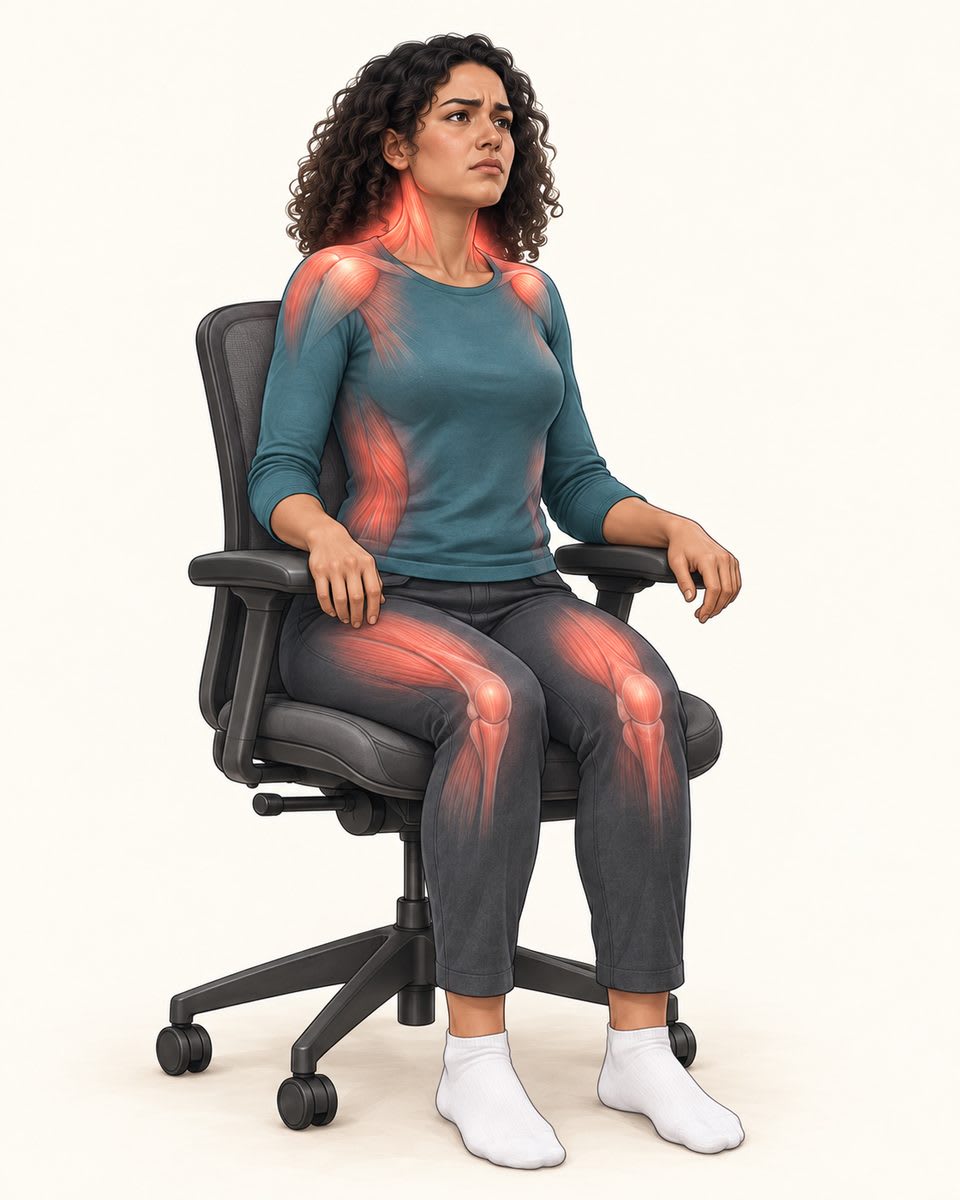
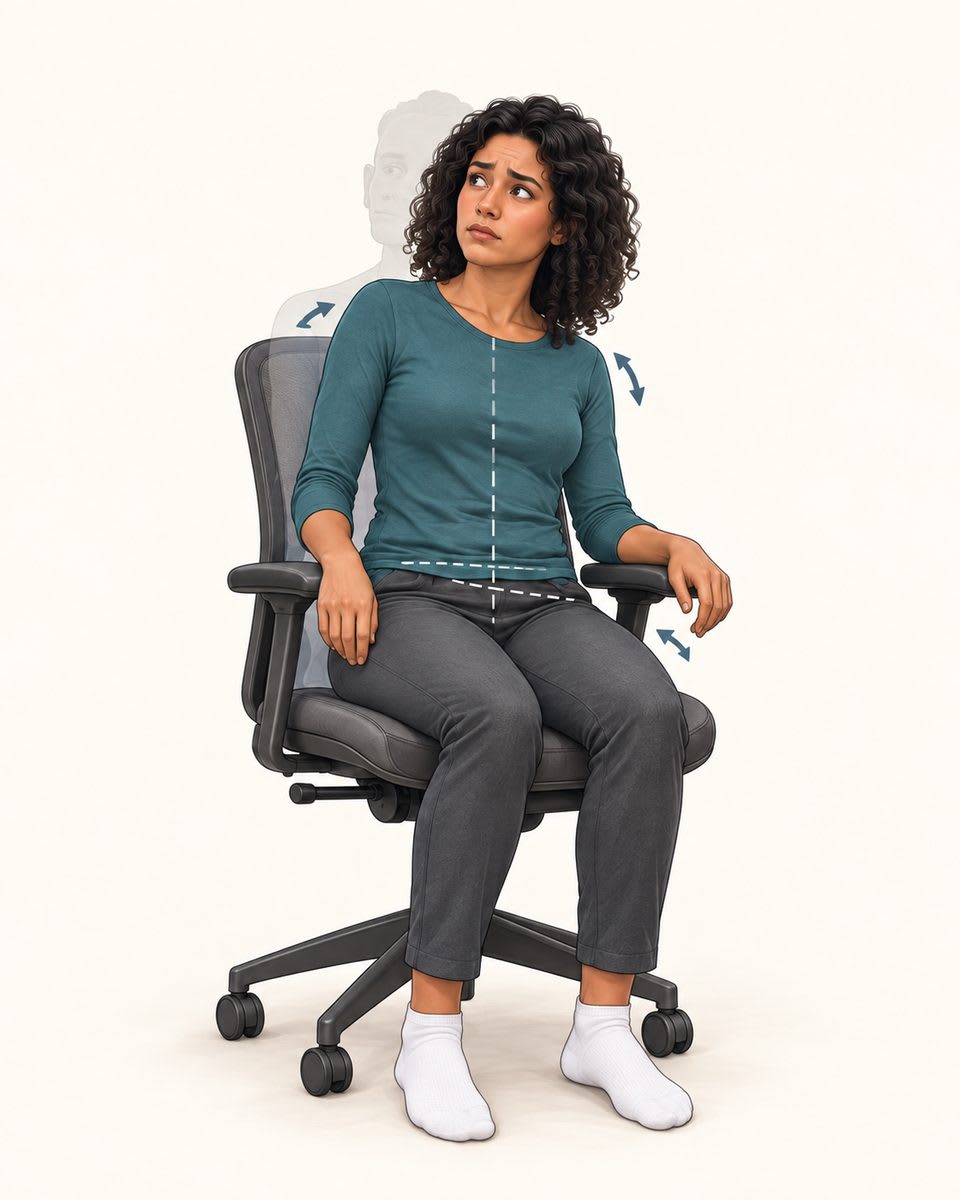
Illustration highlighting sustained muscle co-contraction and fatigue around a seated person's hips and lower back.

02 Muscle Overuse & Fatigue

— When joints can't stabilize passively, muscles are recruited to do the job. This sustained co-contraction — muscles working constantly to hold what connective tissue cannot — leads to accelerated fatigue and the widespread discomfort many hypermobile individuals experience at their desks.

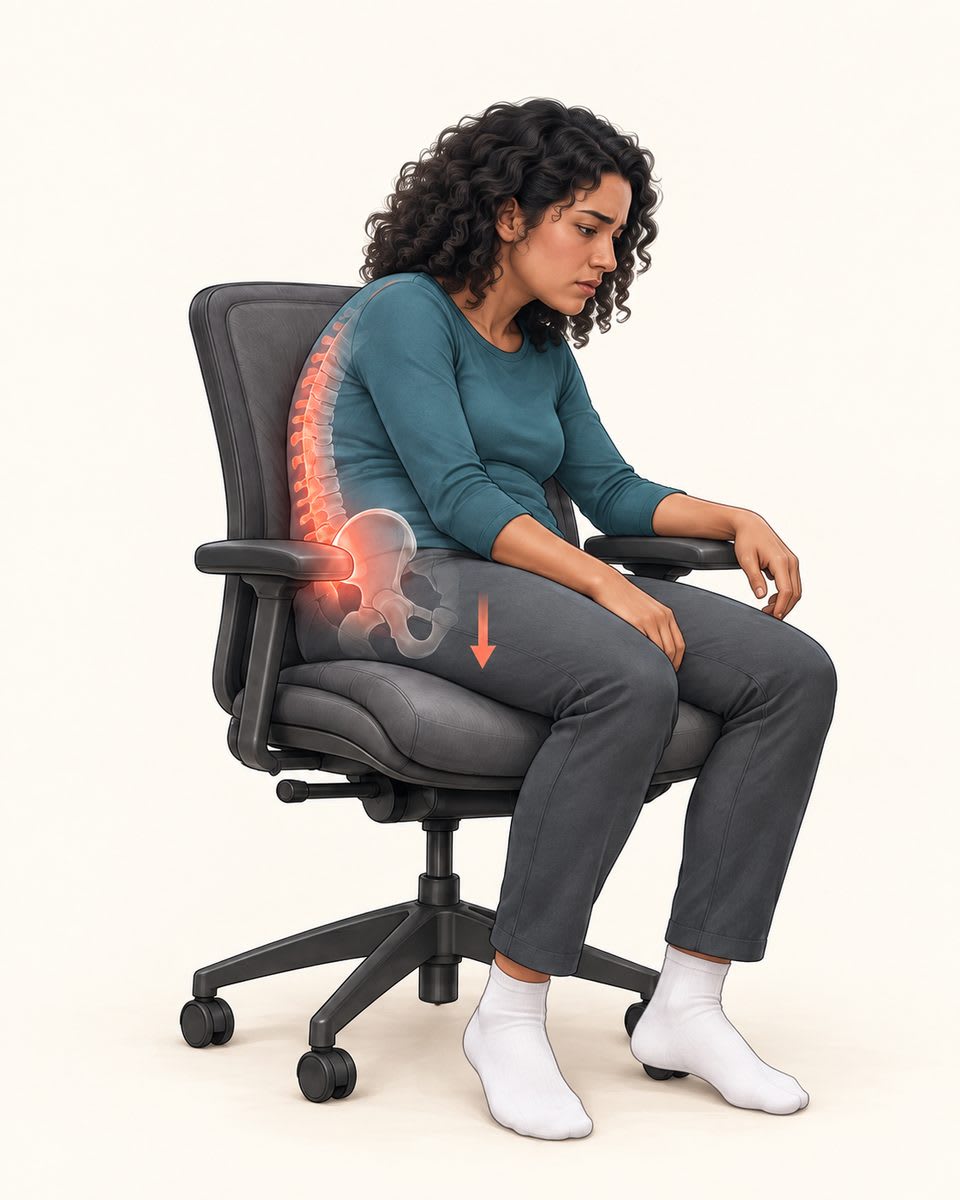
Illustration of a seated person unable to sense or hold a neutral seated position due to reduced joint proprioception.

03 Proprioceptive Challenges

— Many people with hypermobility have altered proprioception — a reduced sense of where their joints are in space. This makes it harder to naturally find and hold a "neutral" seated position, even with the best of intentions, without clear external feedback or structure.

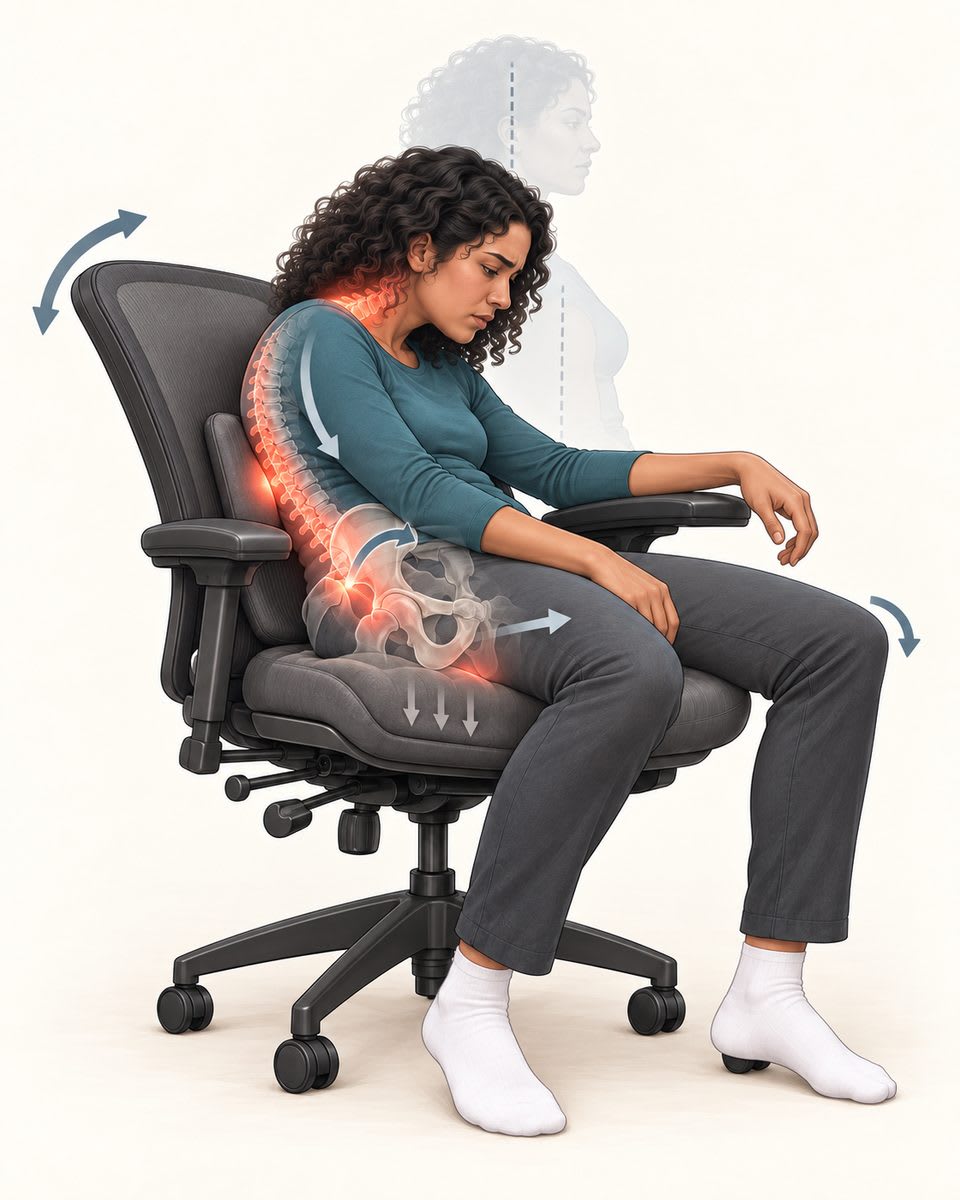
Illustration of a seated person collapsing deeply into a soft chair, pelvis rotated backward and spine rounded.

04 Collapse into the Chair

— In a standard chair with a soft seat and yielding backrest, hypermobile individuals often find themselves folding deeply into the chair — pelvis rotating far backward, spine rounding, and joints loading at end-range positions. Standard chairs simply provide nothing to resist this.

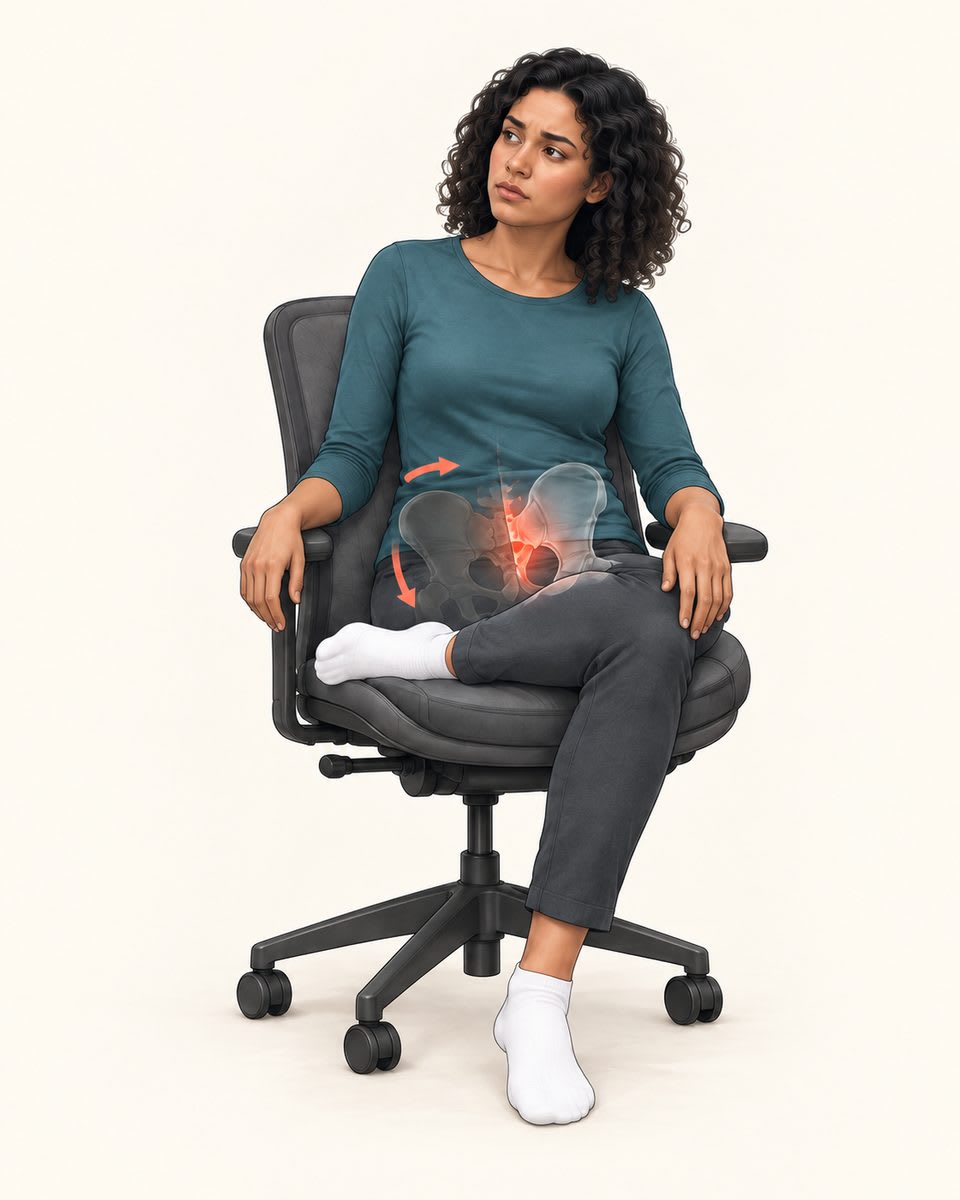
Illustration of the pelvis and sacroiliac joints under strain from an unsupported, freely rotating seated position.

05 Sacroiliac & Pelvic Joint Strain

— The sacroiliac joints and pelvis are frequently affected by hypermobility. When a chair allows the pelvis to rotate and shift freely without support, these joints can be placed under prolonged stress — a common source of discomfort during and after long sitting sessions.

Why Most Ergonomic Chairs Aren't Designed for Hypermobile Bodies

Standard ergonomic chairs were designed for the average body — with average connective tissue stiffness. They assume the body will provide its own baseline stability. For hypermobile individuals, that assumption breaks down:

A woman with hypermobile joints sitting unsupported in a standard chair, pelvis rotated backward and spine collapsing without structural support.

Generic chairs provide passive comfort, not active structural support. — Soft foams and mesh allow the body to settle into its natural resting shape — which, for a hypermobile body, may mean extreme pelvic tilt, deep lumbar flexion, or lateral shifts that load vulnerable joints.

Lumbar pads address one point — not the pelvic foundation. — A lumbar cushion may feel comfortable initially but does nothing to stop posterior pelvic rotation, which remains the root driver of postural collapse and joint loading throughout the spine and hips.

Adjustability without structure is not enough. — A chair with many adjustments still requires the user to hold themselves in those positions. When muscle fatigue sets in — as it quickly does for hypermobile individuals — even well-adjusted chairs stop providing effective support.

Reclining systems can encourage joint end-range loading. — Chairs that allow the user to lean back freely without pelvic or spinal support may feel relaxing momentarily but permit the very joint positions hypermobile individuals need to avoid.

How Anthros May Support You Differently

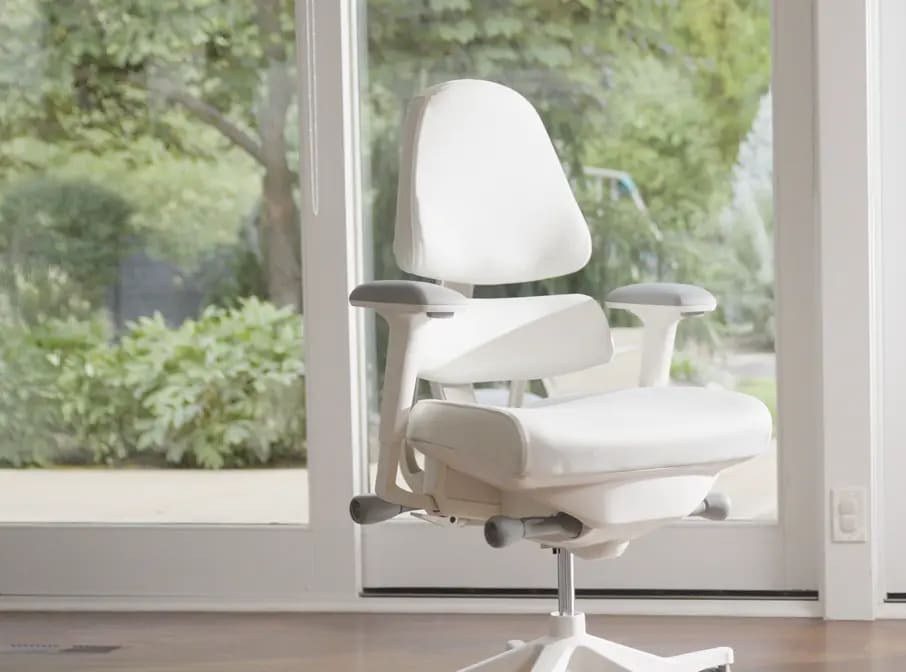
Anthros was designed by experts in biomechanics and complex clinical seating, including individuals with highly complex seating needs far beyond the typical office worker. The founding philosophy: a chair should do the structural work, so your body doesn't have to. This approach may be especially relevant for those with joint hypermobility.

Designed by a former VP of Product Development at the world's largest wheelchair company, with clinical input from licensed Physical Therapists and Occupational Therapists with 70+ years combined seating expertise.

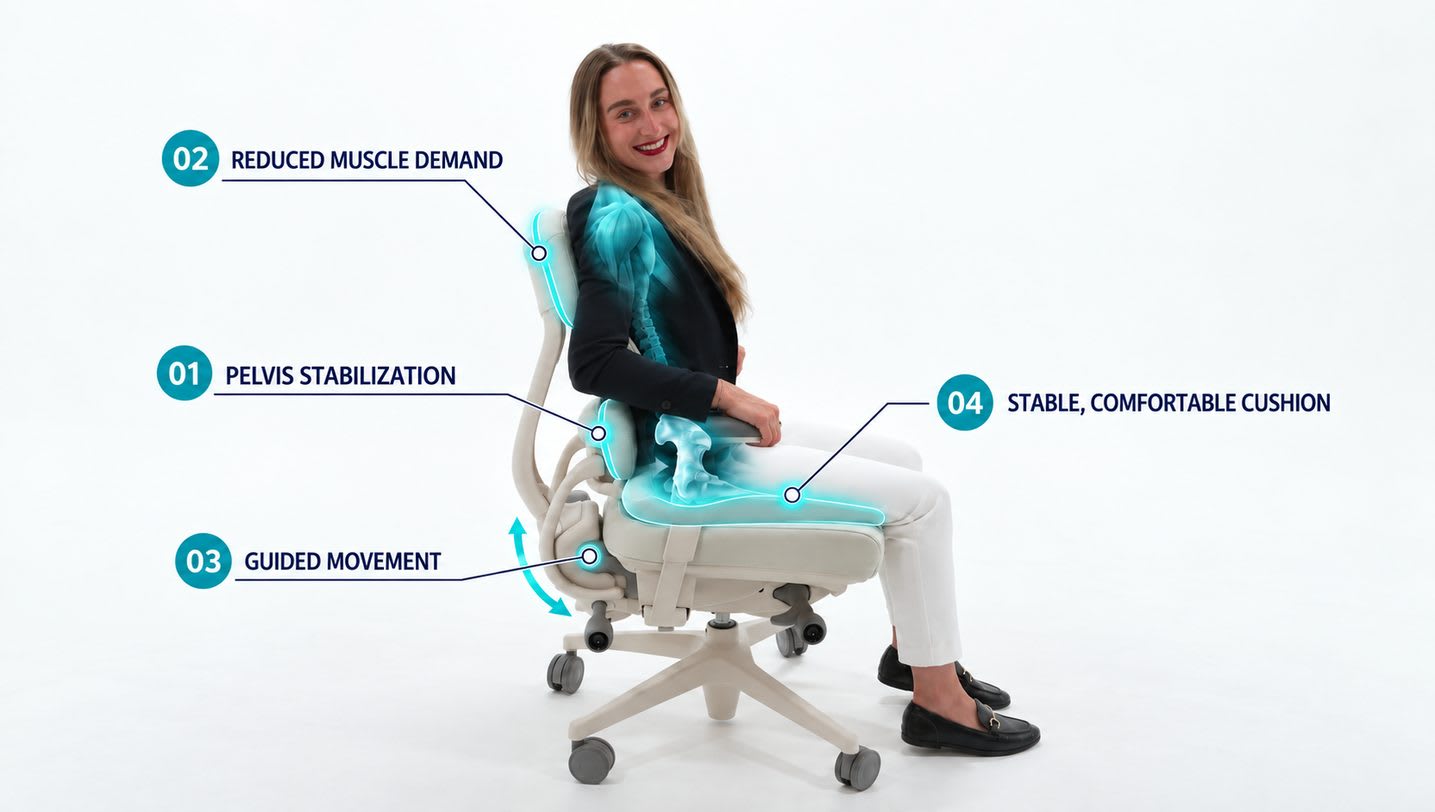
FEATURE 01 — External Pelvis Stabilization

Our Precision Posture System is specifically designed to stabilize the pelvis in a neutral position — providing the external structural foundation that hypermobile connective tissue may not reliably provide. When the pelvis is held in neutral, the joints above it sit in a safer, more functional range through the sitting session.

FEATURE 02 — Reduces the Demand on Your Muscles

By providing structural support at the pelvis and spine, Anthros may reduce the need for constant muscular co-contraction to hold posture. This may help reduce the rate of fatigue during prolonged sitting, a primary complaint for those with hypermobility-related conditions.

FEATURE 03 — Support That Guides — Without Restricting Movement

Anthros is not a rigid brace. Our two-part adjustable back system and tilt mechanism support the spine through natural movement patterns while resisting the postural collapse that leads to joint loading. You can shift positions and tilt throughout the day without losing the supportive structure.

FEATURE 04 — Consistent, Predictable Sitting Position

For people with proprioceptive challenges, a chair that consistently guides the body into the same supported position may reduce the cognitive load of managing posture throughout the day. The Anthros is designed to work the same way, every time you sit down. No readjusting, no guessing.

Annotated view of the Anthros chair labeling its four support features: pelvis stabilization, reduced muscle demand, guided movement, and a stable, comfortable cushion.

Talk to Our Licensed Therapists Before You Buy

Every Anthros comes with a free Clinical Posture Consult with a licensed Physical Therapist or Occupational Therapist — before or after purchase. This is especially valuable for those with complex conditions like hypermobility: our clinical team can review your situation and help determine if Anthros is the right fit for your body and needs.

Common Questions About Hypermobility and Sitting

Why is sitting so uncomfortable and tiring with hypermobile joints or EDS?

In a typical body, passive structures — ligaments, joint capsules, connective tissue — contribute significantly to holding the body upright during sitting. In hypermobile bodies, those structures provide less passive resistance, so muscles must compensate by working continuously. Hours of this sustained muscular effort leads to the fatigue, widespread discomfort, and difficulty concentrating that many people with hypermobility report during and after long sitting sessions.

What kind of support do hypermobile individuals need in a chair?

Structural support at the pelvic base is the most relevant feature for hypermobile sitters. A chair that stabilizes the pelvis in neutral, rather than allowing it to roll backward freely, reduces the downstream joint loading throughout the lumbar spine, sacroiliac joints, and hips. Independently adjustable upper and lower back support, a well-contoured seat, and a tilt system that maintains alignment through movement are also important considerations.

Can a more supportive chair reduce fatigue for people with hypermobility?

For many people, providing external structural support can reduce the muscular demand required to maintain a seated position. When muscles are required to do less work to hold posture, the onset of fatigue may be delayed. Individual responses vary, and the Anthros chair is not intended to treat any medical condition. But for people whose fatigue is significantly driven by the demand of sitting without adequate support, chair design can be a meaningful variable.

How is Anthros different from standard ergonomic chairs for people with hypermobility?

Most ergonomic chairs optimize for the average body, which has average passive stiffness at its joints. Anthros was designed from first principles by experts who worked with the most complex seating cases imaginable — wheelchair users with severe neuromuscular and connective tissue conditions. The philosophy is that the chair provides the structure; the body receives the support. That distinction, providing structural support rather than assuming the user will provide their own, may be especially meaningful for people with hypermobility.

University of Waterloo Spine Biomechanics Lab
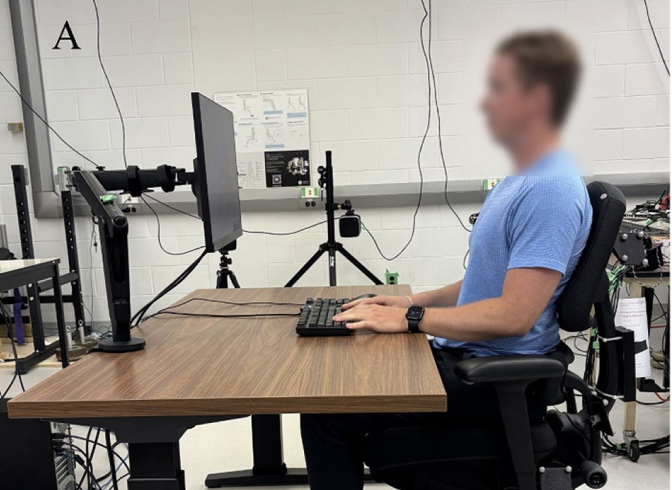
Chair A: a participant seated in the Anthros chair at the University of Waterloo Spine Biomechanics Lab, wired for spinal motion and pressure measurement.
Chair A — Anthros
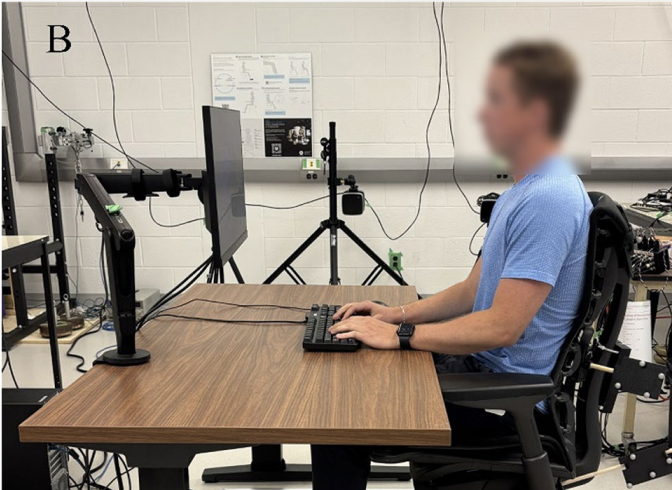
Chair B: a participant seated in the Herman Miller x Logitech Embody Gaming Chair at the University of Waterloo Spine Biomechanics Lab, wired for spinal motion and pressure measurement.
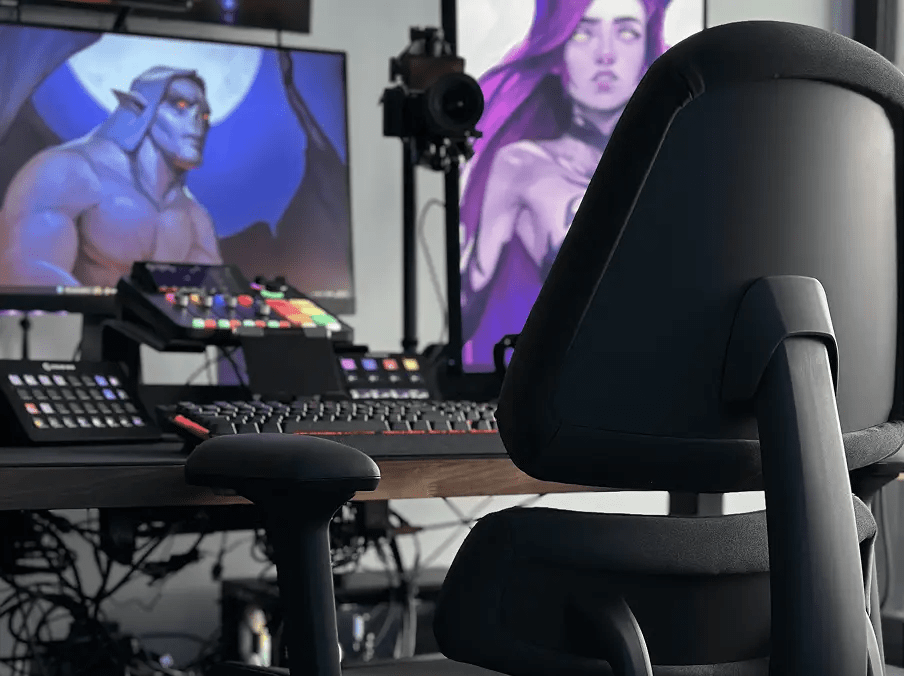
Chair B — Herman Miller x Logitech Embody Gaming Chair

Tested on Real People. Measured by Scientists.

Researchers at the University of Waterloo, one of the world's leading spine research institutions, put Anthros head-to-head against the Herman Miller x Logitech Embody Gaming Chair. Sixteen people sat in each chair for a full hour while scientists measured how their spines actually moved and held position.

The results were clear.

Less Upper Back Rounding

Anthros users sat measurably more upright, 3.9° to 5.6° less rounding through the upper back compared to the Herman Miller x Logitech Embody Gaming Chair. For hypermobile joints, less compensatory rounding means less end-range loading through the spine — and less reliance on muscles to hold a position connective tissue alone can't stabilize.

Pelvis Positioned in Neutral

The pelvis is the foundation of spinal alignment. When it rotates backward, it can contribute to a more flexed, slouched posture above — exactly the postural collapse that hypermobile joints have the least passive structure to resist on their own. In testing, Anthros' pelvic support reduced posterior pelvic tilt at the start of sitting, positioning the pelvis closer to neutral compared with Embody.

The chair's lower support was effective in restricting posterior rotation of the pelvis, facilitating a posture closer to neutral.

— Dr. Jack Callaghan, University of Waterloo Spine Biomechanics Lab (2025)

What Anthros Owners with Hypermobility Are Saying

Individual results may vary. The Anthros chair is not intended to diagnose, treat, cure, or prevent any medical condition.

4.8 ★★★★★ Based on 495 verified reviews

★★★★★ 2 months ago

I have hEDS and working from home has always been a struggle — I would finish every call exhausted from just trying to hold myself up in my old chair. With the Anthros, I actually feel supported. The pelvic support in particular is unlike anything I've experienced. My fatigue during work hours has meaningfully improved. I can't recommend it enough for anyone with hypermobility.

Lauren M. Verified buyer
★★★★★ 3 months ago

My occupational therapist specifically recommended I look at Anthros because of my connective tissue issues. The Clinical Posture Consult before I purchased was invaluable — Ashley walked me through exactly how to set it up for my body. It took a couple weeks to adjust but now I can sit without the pain building the way it used to. It's become essential for my workday.

Robin A. Verified buyer
★★★★★ 6 weeks ago

Flexible joints mean I've always sunk into every chair I've tried. The Anthros actually gives me something to sit against. I feel like my spine is in a position I can work from — not something I have to actively manage every few minutes. The 60-day trial removed all the risk. I decided by week two.

Sam T. Verified buyer

Individual results may vary. The Anthros chair is not intended to diagnose, treat, cure, or prevent any medical condition.

Try Anthros Risk-Free

Feel the difference firsthand. Feel better, work better, and live better with Anthros. Get started today!