The Office Chair Engineered for Neck and Upper Spine Support
If desk work triggers tension, stiffness, or aching in your neck or upper back, you're not alone. Neck discomfort is one of the most common complaints among people who sit for long hours, and it's almost always driven by what's happening below, at the pelvis and thoracic spine.
But here's the truth: sitting doesn't have to strain your neck.
Neck discomfort during or after desk work often stems from structural issues in how you're sitting, most of which begin far lower than the neck itself:
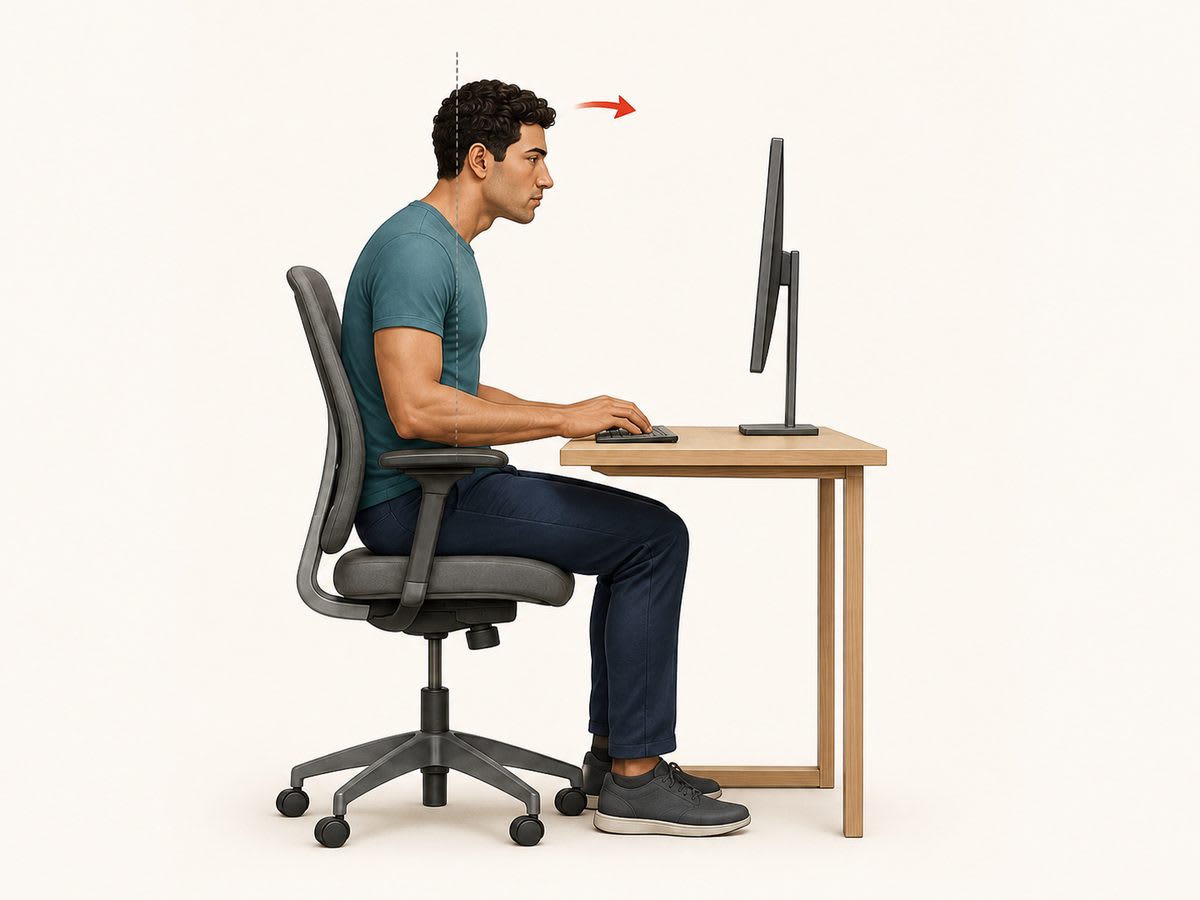
01 Forward Head Posture
— For every inch your head shifts forward from neutral, the effective load on your cervical spine increases significantly. After hours at a desk, this sustained forward position can create muscle fatigue and nerve irritation throughout the neck and shoulders.
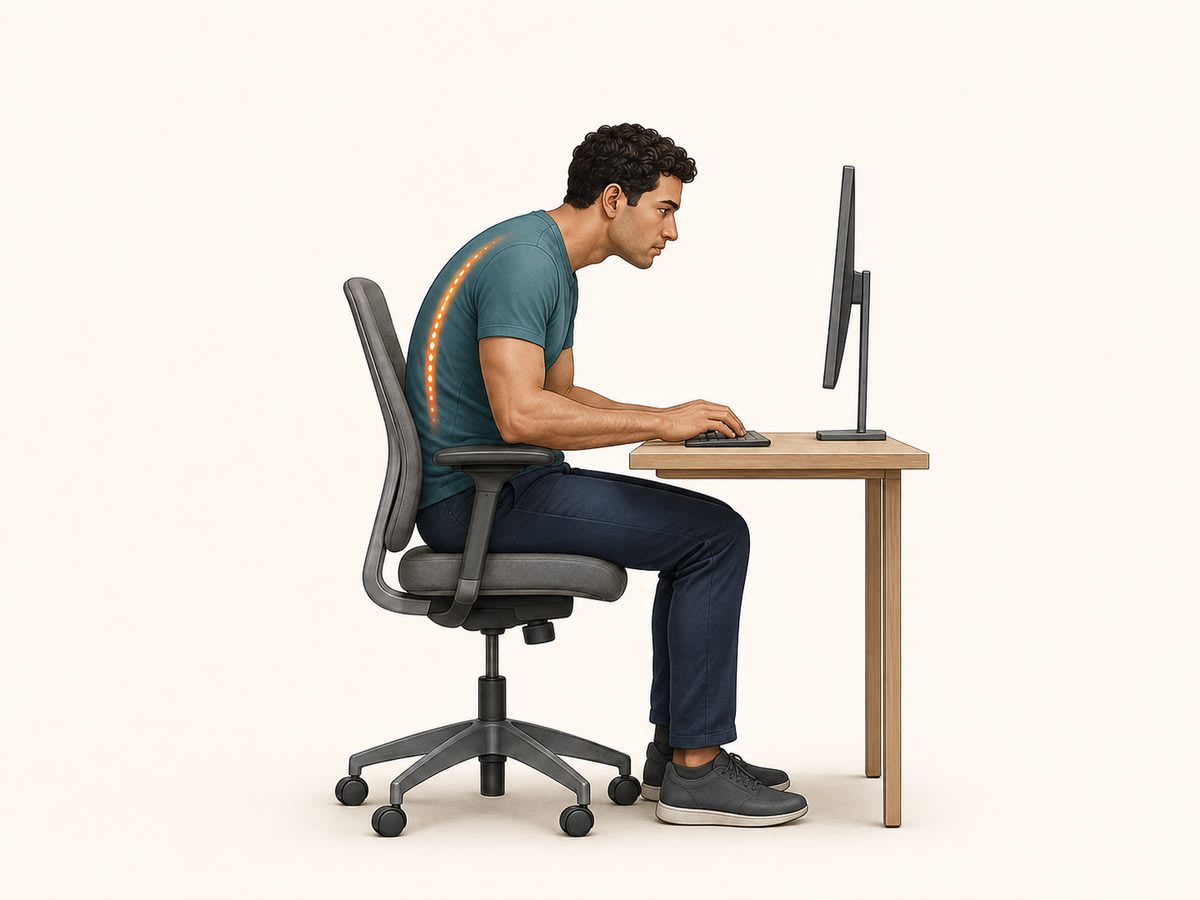
02 Thoracic Kyphosis (Rounded Mid-Back)
— A rounded upper back forces the neck to extend further forward to keep your eyes level with your screen. Without upper and mid-back support, the thoracic spine collapses — and the cervical spine bears the consequence.
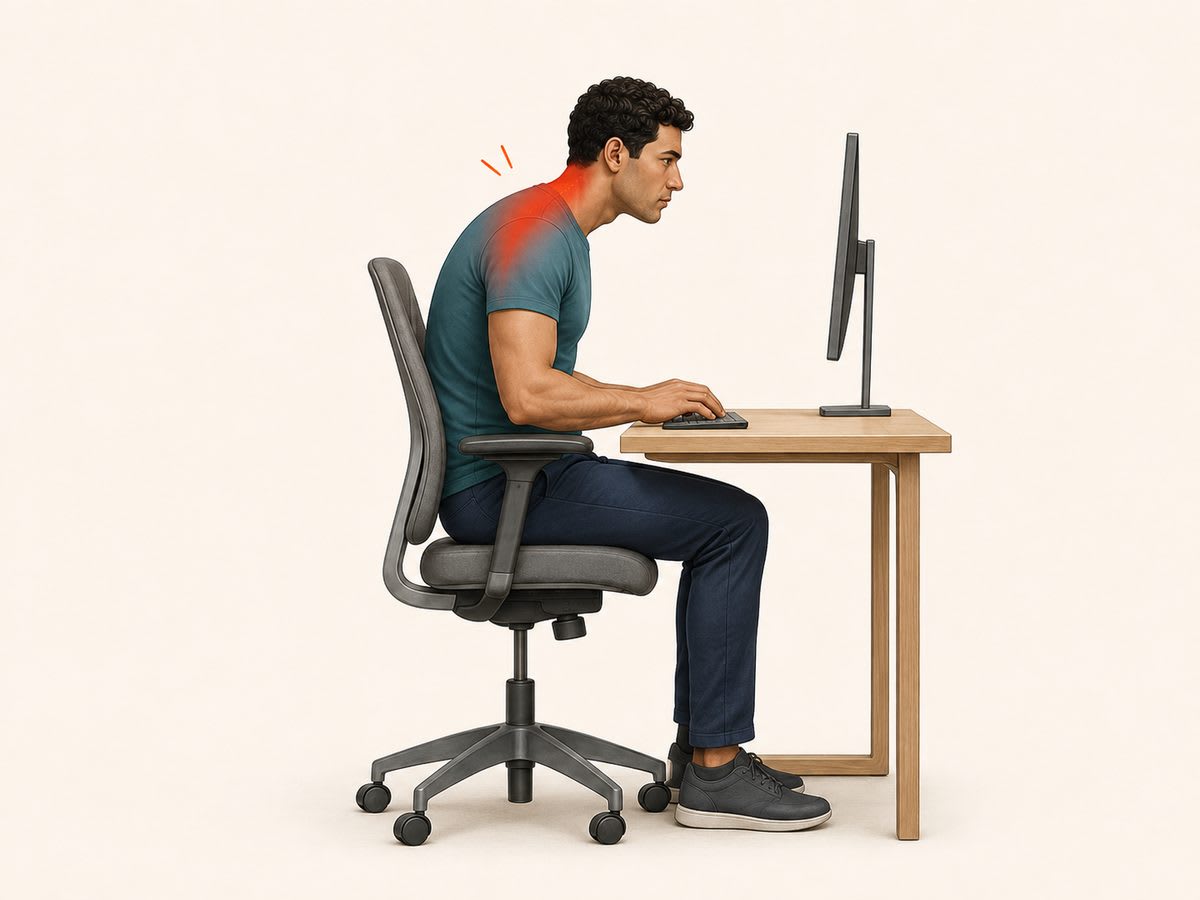
03 Muscle Fatigue & Overuse
— The muscles of the neck and upper trapezius work constantly to support the weight of your head in a non-neutral position. Hours of sustained effort lead to accumulating fatigue, tension, and eventually discomfort.
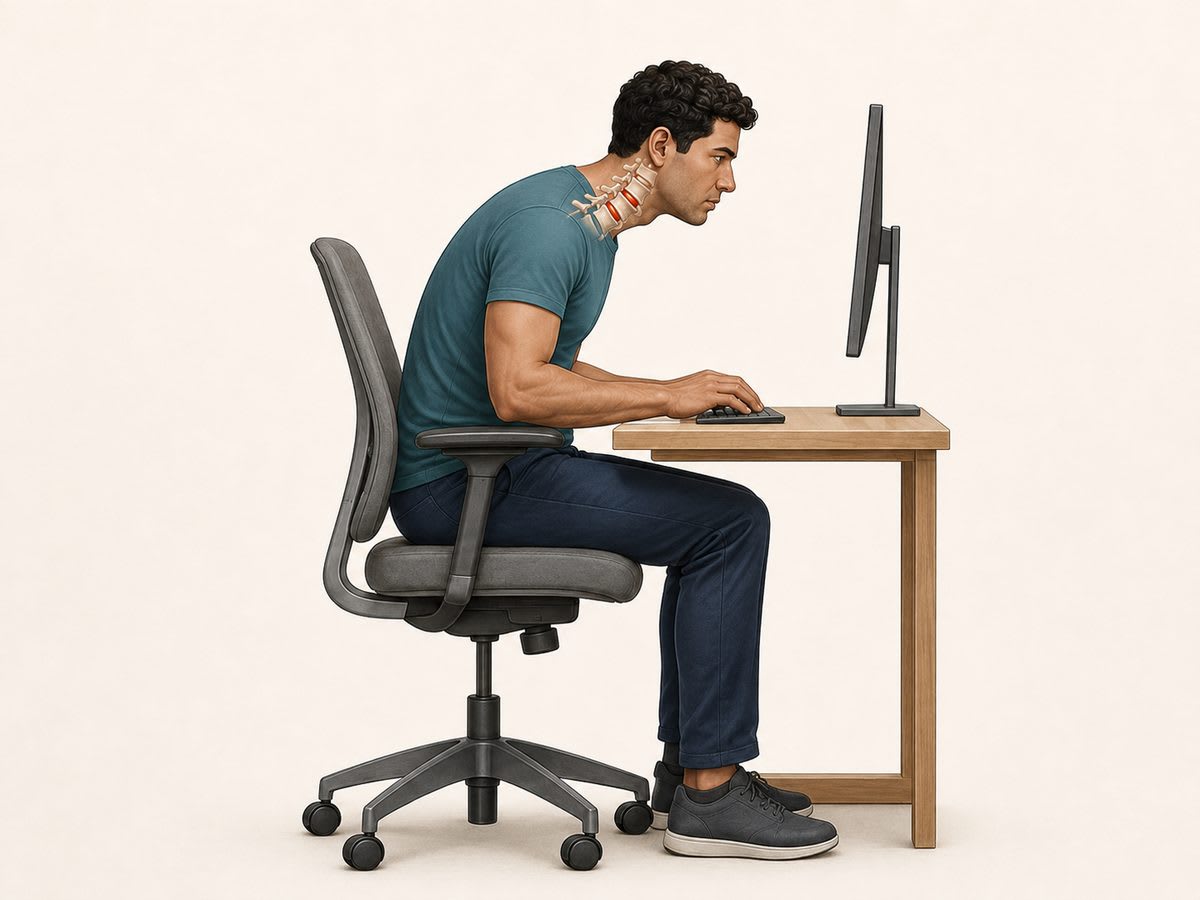
04 Cervical Disc Compression
— Poor spinal alignment during prolonged sitting can increase compressive forces on the discs of the cervical spine. Over time, this may contribute to a range of neck symptoms in those who already have cervical disc issues.
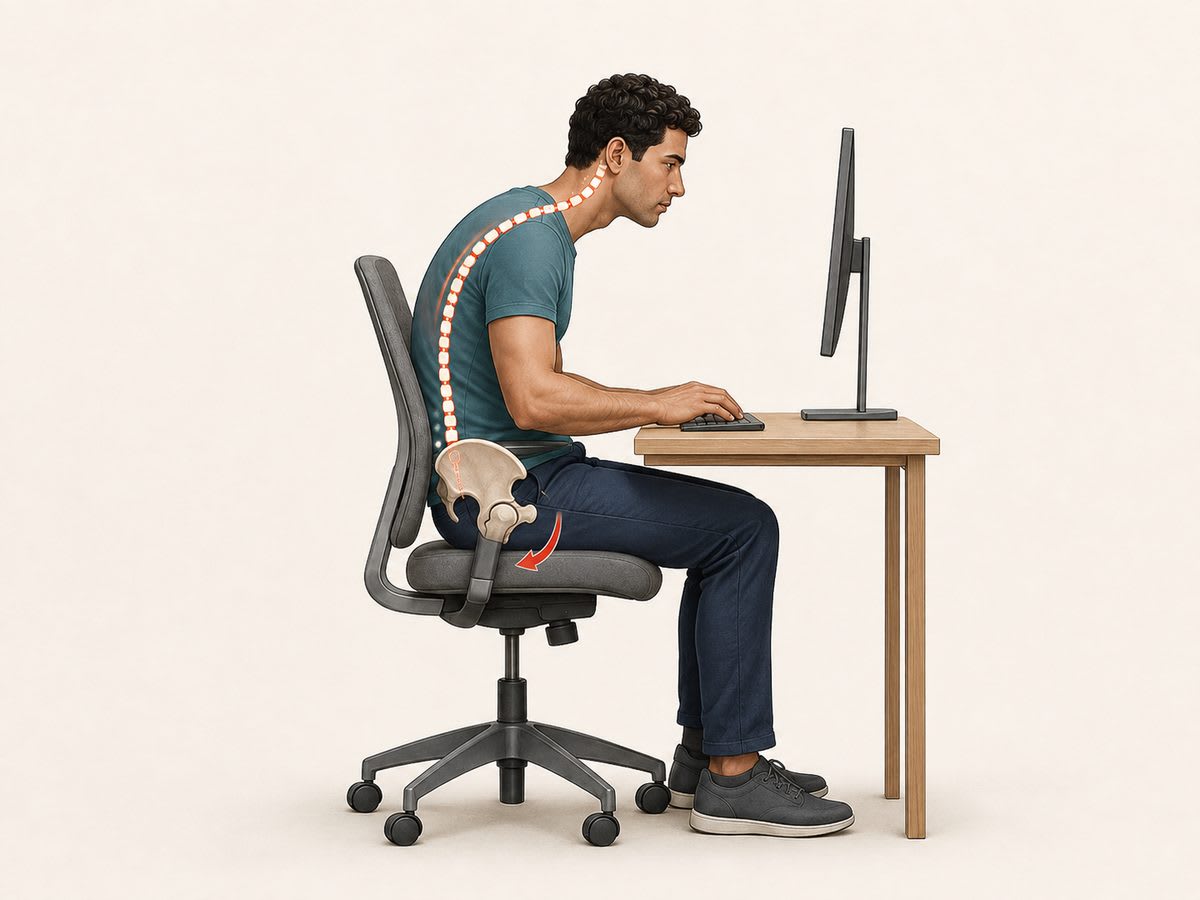
05 Pelvis Misalignment — The Root Cause
— When the pelvis tilts backward during sitting, as it does in most chairs, the entire spinal column above it compensates. The lumbar curve flattens, the thoracic spine rounds, and the head shifts forward. Neck strain is often a symptom of a problem that starts at the pelvis.
Why Most Office Chairs Don't Help Your Neck
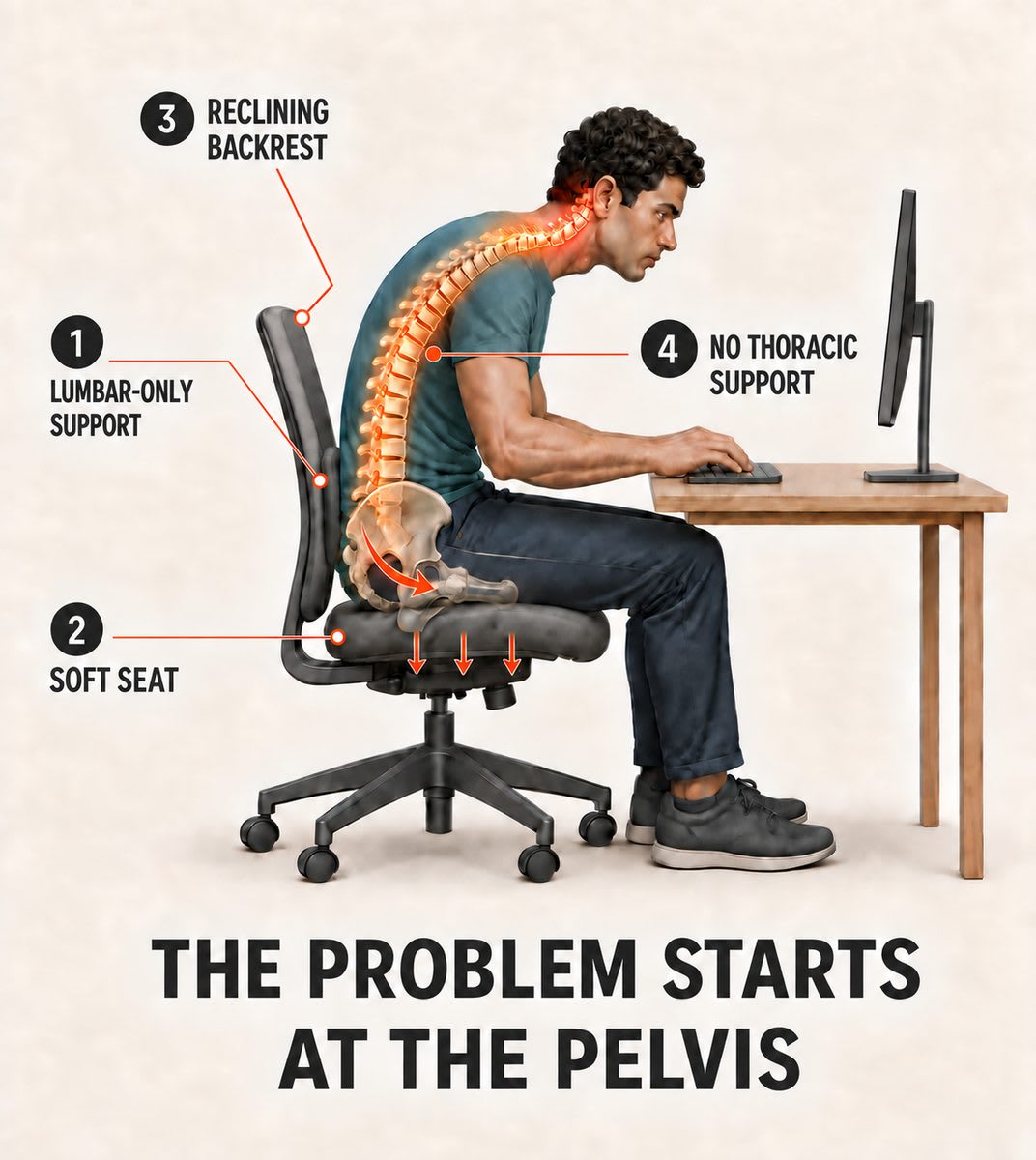
Most chairs focus exclusively on lumbar support, completely missing the true chain of events that leads to neck discomfort:
Lumbar-only support addresses the mid-chain, not the root. — A lumbar pad may reduce low-back discomfort without correcting the pelvic tilt that drives the entire postural cascade, including forward head position.
Soft seat cushions promote posterior pelvic tilt. — When a cushion allows the pelvis to rotate backward, the spine above it has no choice but to round, eventually pulling the head forward and loading the cervical structures.
Reclining backrests encourage slumping. — A chair back that reclines collapses the pelvis and allows you to slump and position your head in front of your center of gravity, exactly where neck strain begins.
No thoracic support means the mid-back collapses. — The thoracic spine is the direct neighbor of the cervical spine. When it's left unsupported and allowed to round, the neck compensates with hyperextension or forward positioning.
How Anthros May Support You Differently
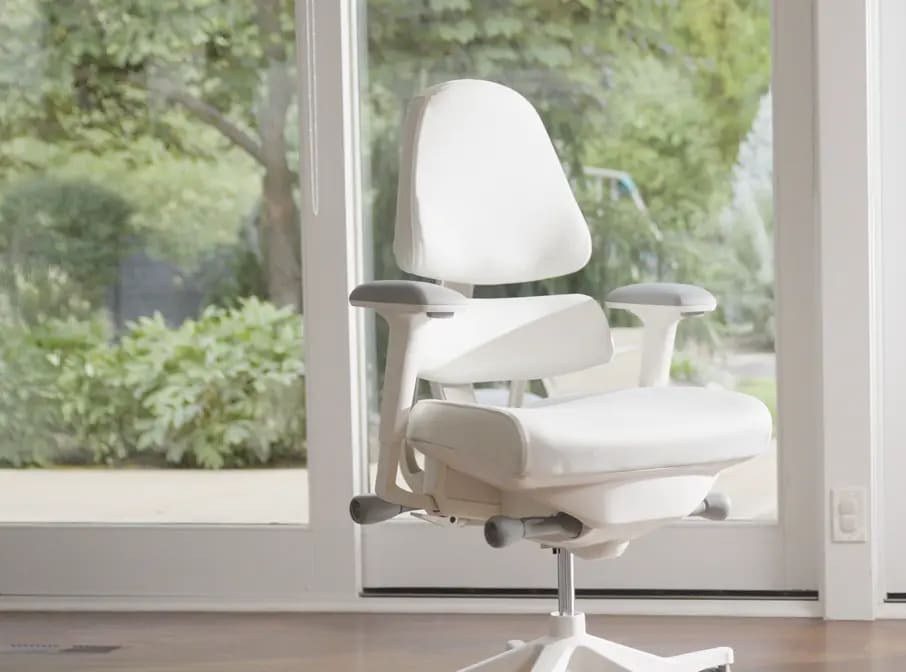
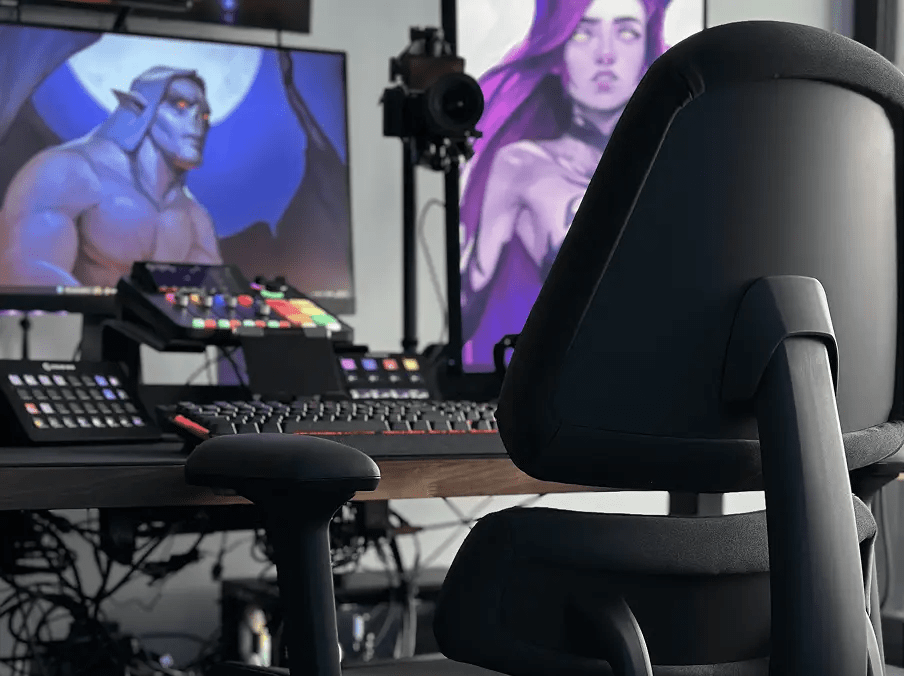
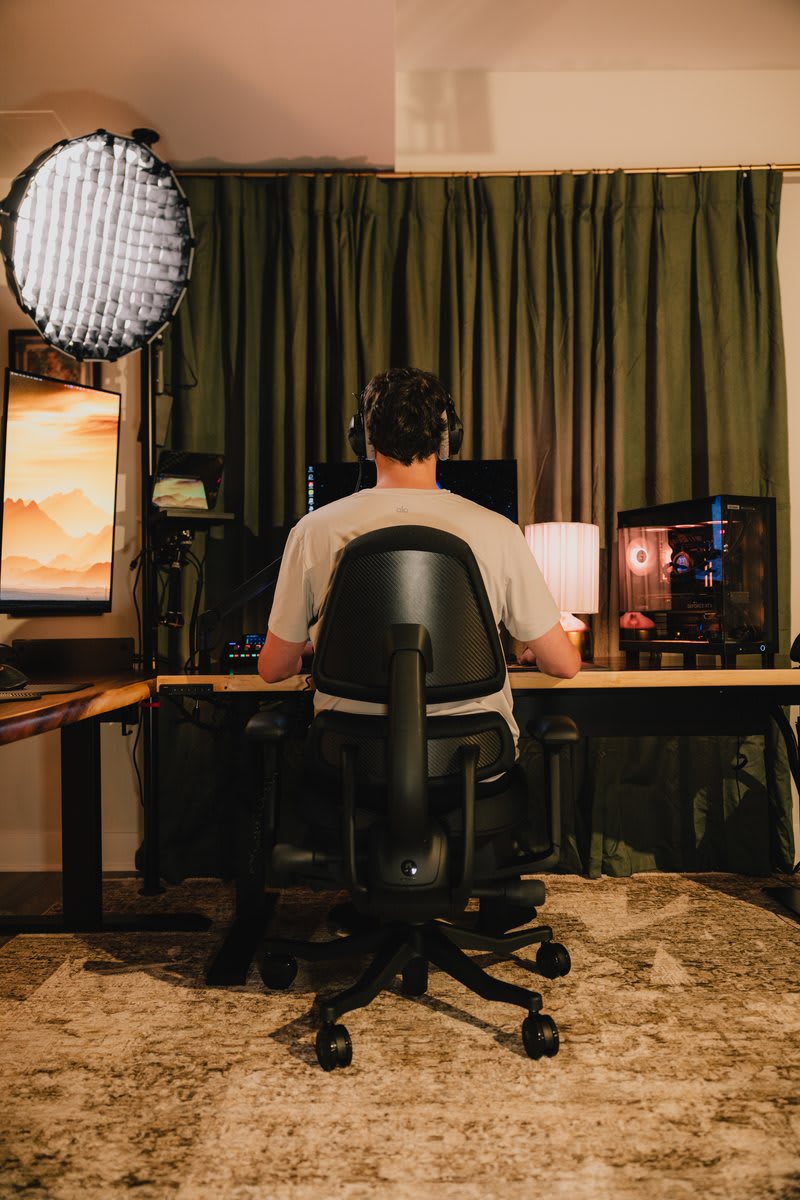
Anthros was designed by experts in biomechanics and complex seating to support the pelvis first, which allows the thoracic and cervical spine to align naturally and stay that way. This approach may provide a more comfortable sitting experience for those who experience neck discomfort during prolonged desk work.
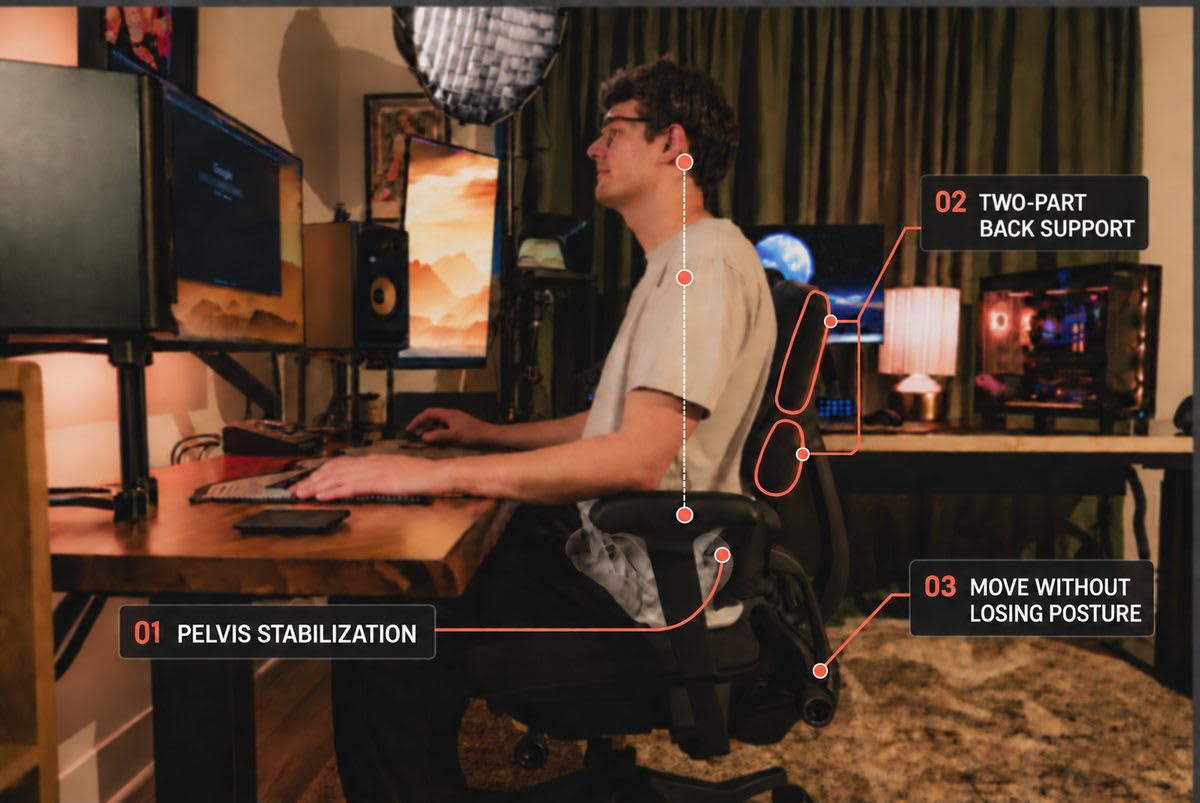
FEATURE 01 — Pelvis Stabilization — the Foundation of Neck Alignment
Our Precision Posture System stabilizes the pelvis in a neutral position first. When the pelvis is correctly supported, the lumbar, thoracic, and cervical spine can stack naturally above it, reducing the postural compensation that contributes to neck and upper back discomfort.
FEATURE 02 — Two-Part Back System — Lumbar and Thoracic Support
Unlike chairs that offer only lumbar support, our independently adjustable two-part back system addresses both the lower and upper spine. Thoracic support helps reduce the thoracic kyphosis that forces your head forward, supporting the mid-back so the neck can remain in a more neutral position.
FEATURE 03 — Move Without Losing Your Posture
Our tilt system is designed to maintain pelvis and spinal alignment as you shift positions throughout the day. You can relax and move without collapsing your spine as the seat and back move together, supporting the posture that keeps your neck in a more neutral position over long hours of sitting.
Common Questions About Neck Discomfort and Sitting
Why does sitting at a desk cause neck pain or tension?
Most desk setups encourage a forward head position. Your screen is slightly too low, your desk is too high, your seat doesn't support your pelvis, and your thoracic spine rounds. When the head shifts even slightly forward of neutral, the muscles of the posterior neck work significantly harder to support its weight over extended periods. Hours of this sustained effort lead to accumulated tension and discomfort.
What type of chair is best for people with neck discomfort?
A chair that addresses the pelvis and thoracic spine, not just the lumbar region, is most relevant to neck comfort. When the pelvis is stabilized in neutral and the mid-back is supported, the head naturally sits closer to neutral alignment, reducing the load on the cervical spine. Look for independent adjustment of both the lower and upper back support zones.
Can improving my sitting posture reduce neck tension?
Research and clinical practice support the connection between sitting posture and neck symptoms for many people. Key factors include pelvis position, desk height/distance, screen height, and thoracic support. A chair that automatically encourages neutral pelvis and thoracic alignment removes the need to consciously "hold" good posture throughout the day.
How does pelvis support relate to neck position?
The pelvis is the base of the spine. When it tilts backward, as it does in most chairs, every segment above it compensates: the lumbar curve flattens, the thoracic spine rounds, and the cervical spine is forced into a forward or hyperextended position to maintain eye level. Stabilizing the pelvis in neutral is the single most effective intervention for correcting the entire postural chain, including the neck.
University of Waterloo Spine Biomechanics Lab
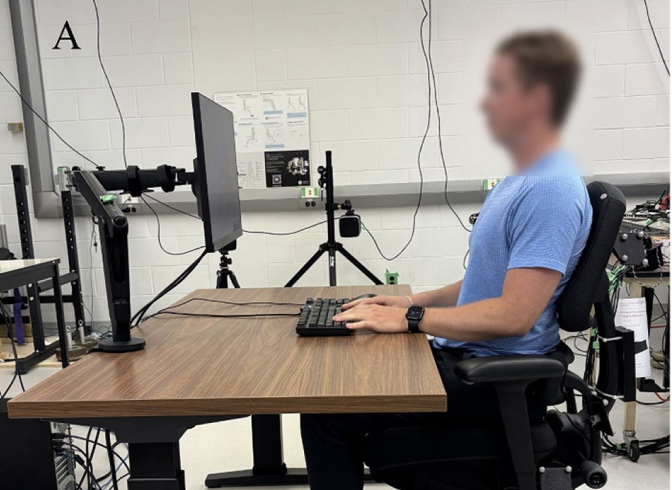
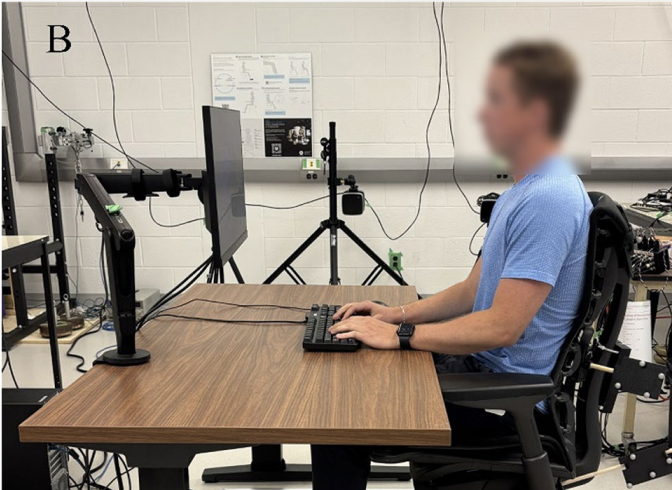
Chair A — AnthrosChair B — Herman Miller x Logitech Embody Gaming Chair
Tested on Real People. Measured by Scientists.
Researchers at the University of Waterloo, one of the world's leading spine research institutions, put Anthros head-to-head against the Herman Miller x Logitech Embody Gaming Chair. Sixteen people sat in each chair for a full hour while scientists measured how their spines actually moved and held position.
The results were clear.
Less Upper Back Rounding
Anthros users sat measurably more upright, 3.9° to 5.6° less rounding through the upper back compared to the Herman Miller x Logitech Embody Gaming Chair. That's the same region that curls forward when you're fatigued, pulling your head forward and straining your neck.
Pelvis Positioned in Neutral
The pelvis is the foundation of spinal alignment. When it rotates backward, it can contribute to a more flexed, slouched posture above. In testing, Anthros' pelvic support reduced posterior pelvic tilt at the start of sitting, positioning the pelvis closer to neutral compared with Embody.
The chair's lower support was effective in restricting posterior rotation of the pelvis, facilitating a posture closer to neutral.
— Dr. Jack Callaghan, University of Waterloo Spine Biomechanics Lab (2025)
What Anthros Owners with Neck Discomfort Are Saying
Individual results may vary. The Anthros chair is not intended to diagnose, treat, cure, or prevent any medical condition.
4.8 ★★★★★ Based on 495 verified reviews
★★★★★6 weeks ago
I had been dealing with constant neck and shoulder tension for two years of working from home. Three weeks into using the Anthros I noticed my shoulders weren't climbing up to my ears by the end of the day. I didn't expect a chair to make this much difference — I thought it was a 'sitting is bad' problem. Turns out it was a 'wrong chair' problem.
Michelle T. Verified buyer
★★★★★2 months ago
My physical therapist suggested looking at my chair after months of cervical treatment. The Anthros was her recommendation. The pelvic support is what makes the difference — once my lower spine was in the right position, everything above it settled. My neck pain has been significantly reduced. The free Clinical Posture Consult helped me dial it in perfectly.
James K. Verified buyer
★★★★★3 months ago
I'm a software engineer sitting 10+ hours a day. I used to end every workday with a headache and a knotted neck. The first week in the Anthros I noticed my head felt 'lighter' — I finally understood what neutral head position actually feels like. Worth every penny and then some.
Priya S. Verified buyer
Individual results may vary. The Anthros chair is not intended to diagnose, treat, cure, or prevent any medical condition.
Start Your 60-Day Risk-Free Trial
Sit in your Anthros for 60 full days. If it doesn't meaningfully improve your comfort, return it for a full refund. We can offer this because the data is on our side.