The Office Chair Engineered to Reduce Pressure on Your Tailbone
If sitting causes pain or discomfort at the base of your spine, you're not alone. Tailbone discomfort is one of the most direct consequences of poor seat design, and seat pressure science shows exactly why most chairs make it worse.
The right seat, in the right position, may change how sitting feels entirely.
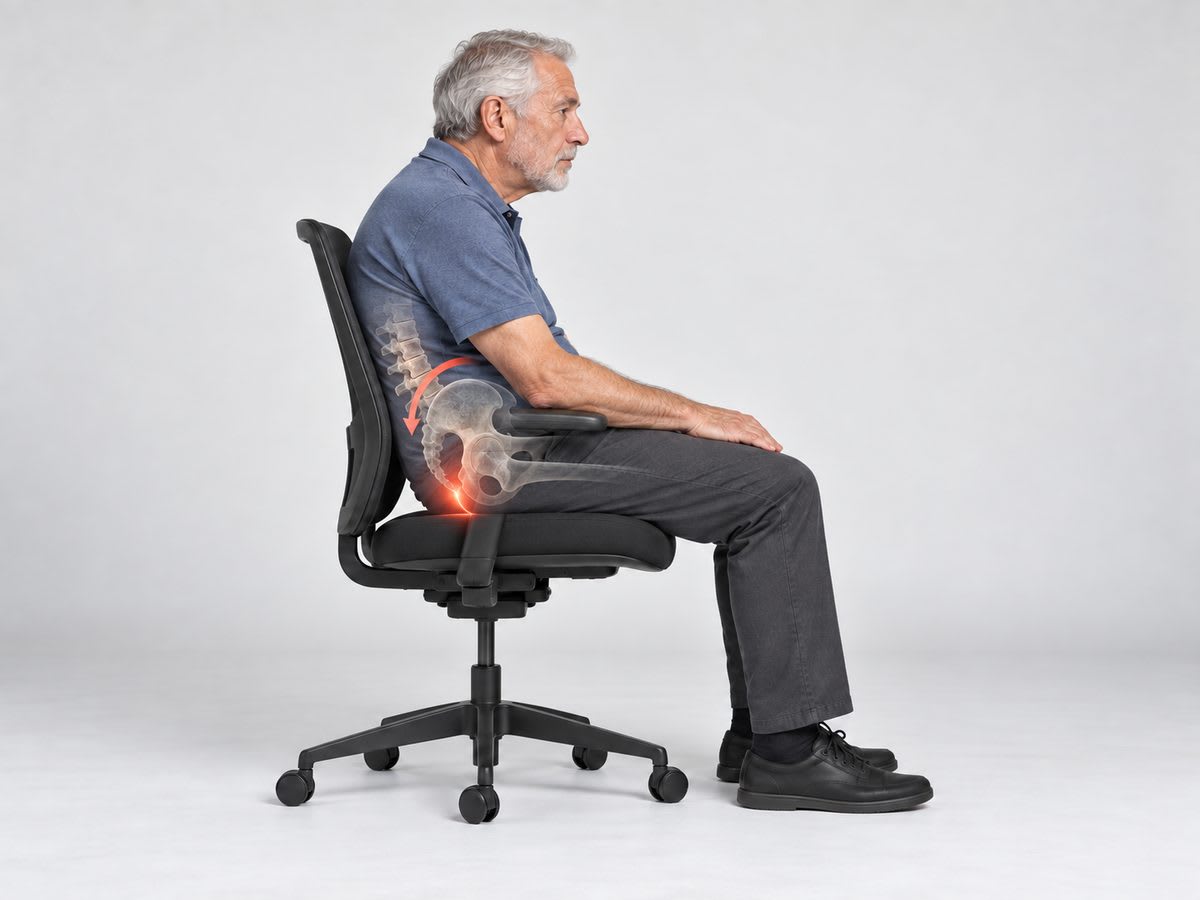
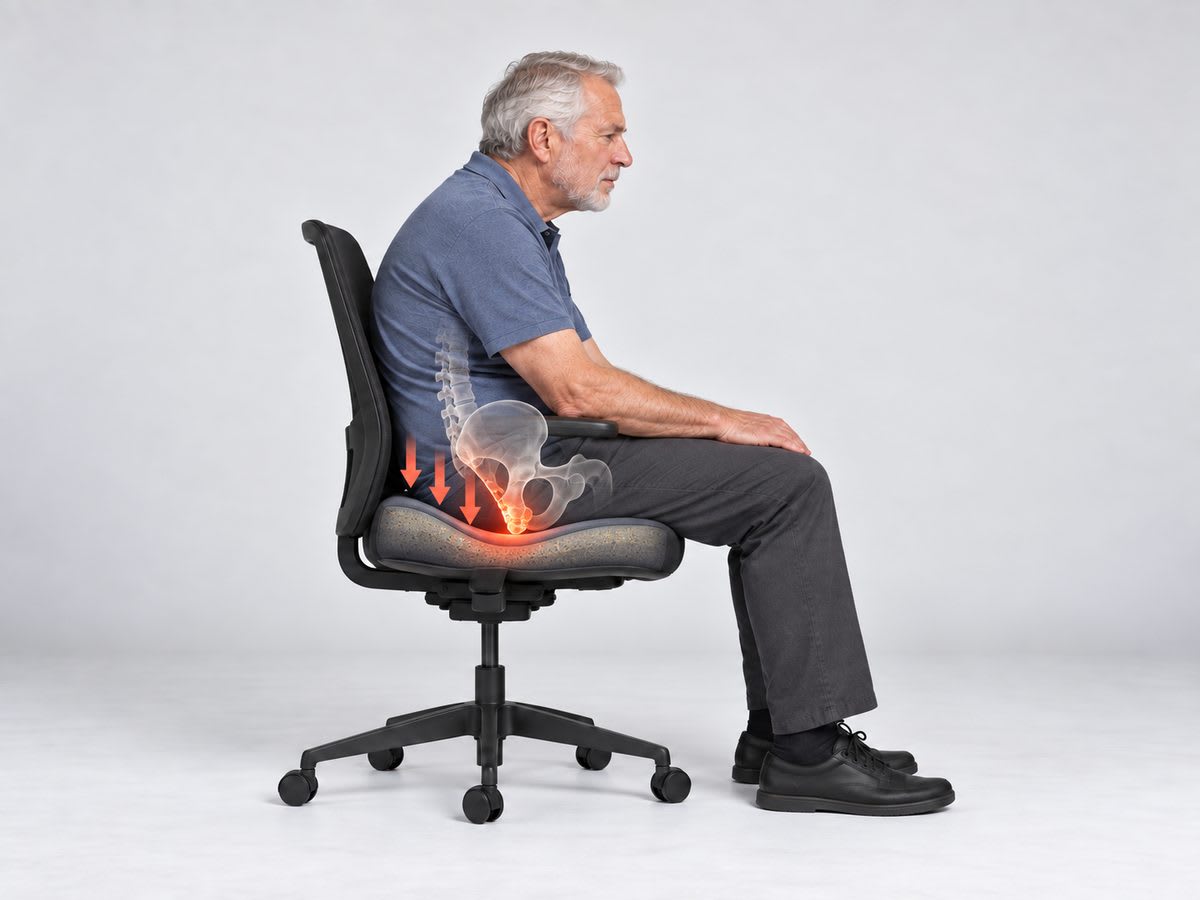
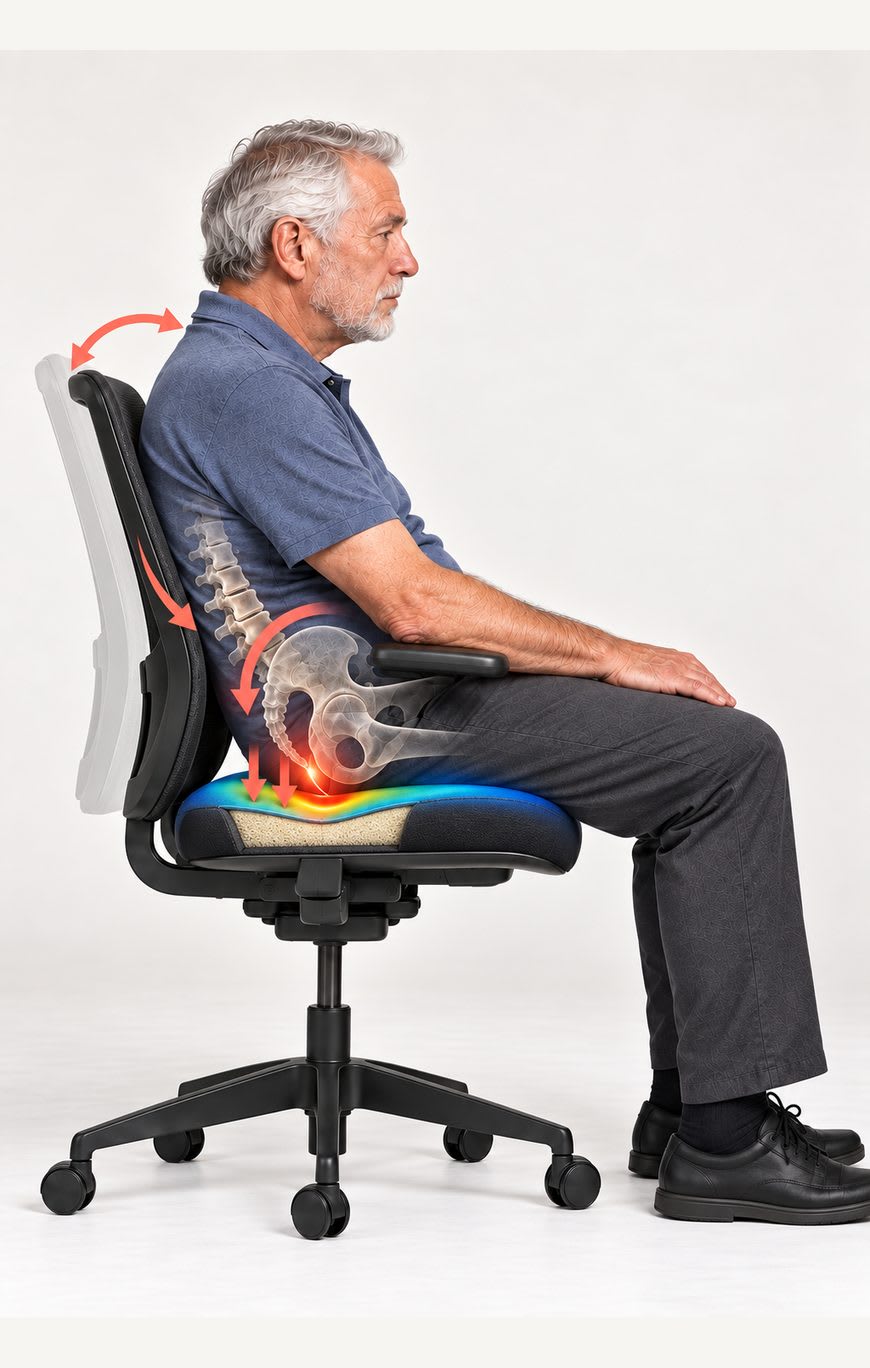
The coccyx (tailbone) sits at the very base of the spine and is not designed to bear significant body weight. When sitting, the way your pelvis is positioned determines how much load is transferred to the tailbone. And most office chairs get this wrong:
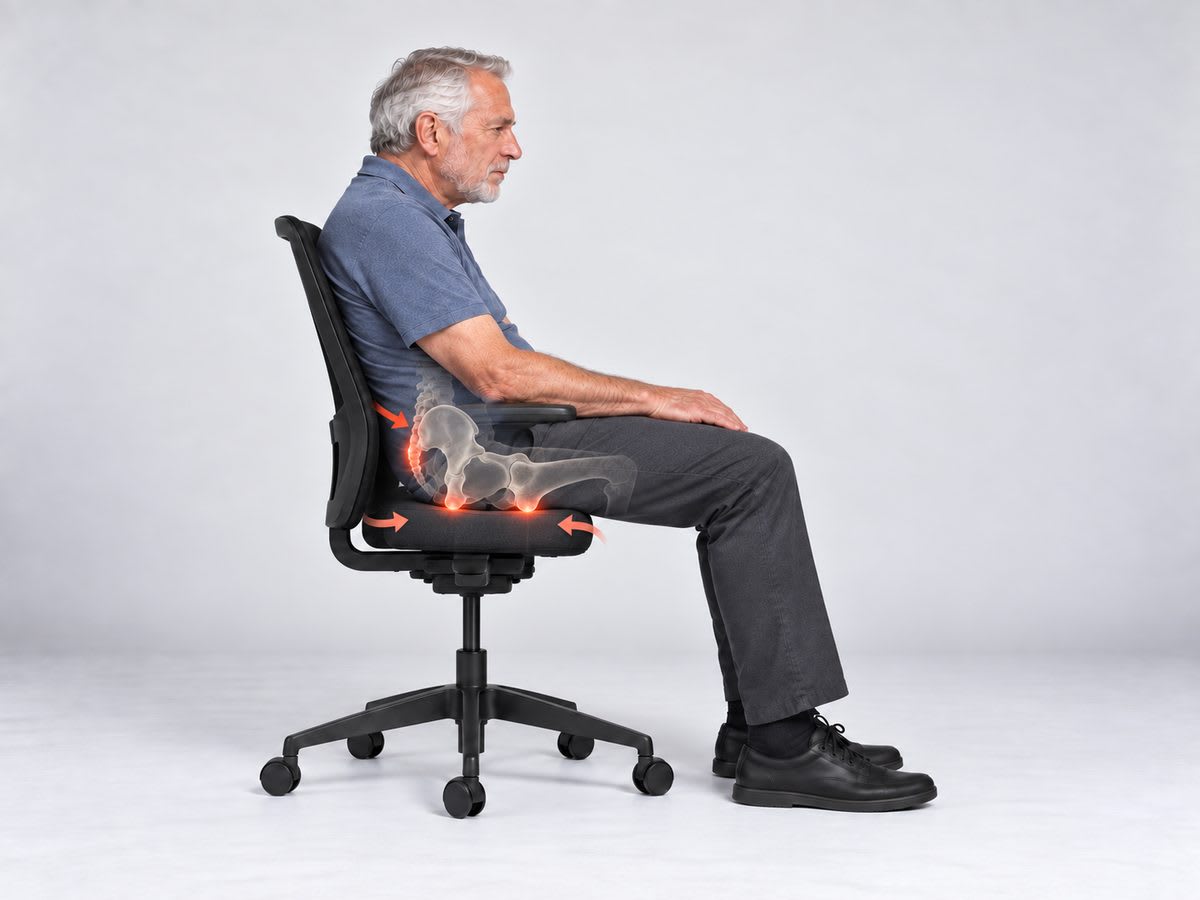
01 Posterior Pelvic Tilt — the Core Problem
When a seat allows the pelvis to rotate backward, the tailbone rotates downward and inward, directly into the seat surface. This is the most common reason people experience coccyx discomfort while sitting. A seat and back that does not hold the pelvis in neutral promotes this rotation by default.
02 Soft or Unsupportive Seat Foam
Seats that feel plush initially may bottom out under sustained weight, allowing the bony structures of the pelvis, including the tailbone, to make contact with a harder underlying surface. Consistent, even pressure distribution is critical for long hours of sitting.
03 Narrow or Poorly Contoured Seat Surfaces
A seat that is too narrow, too deep, or shaped without consideration for the pelvis will concentrate pressure in the wrong areas. Without a contoured surface that supports the ischial tuberosities (sit bones), the tailbone carries a disproportionate share of body weight.
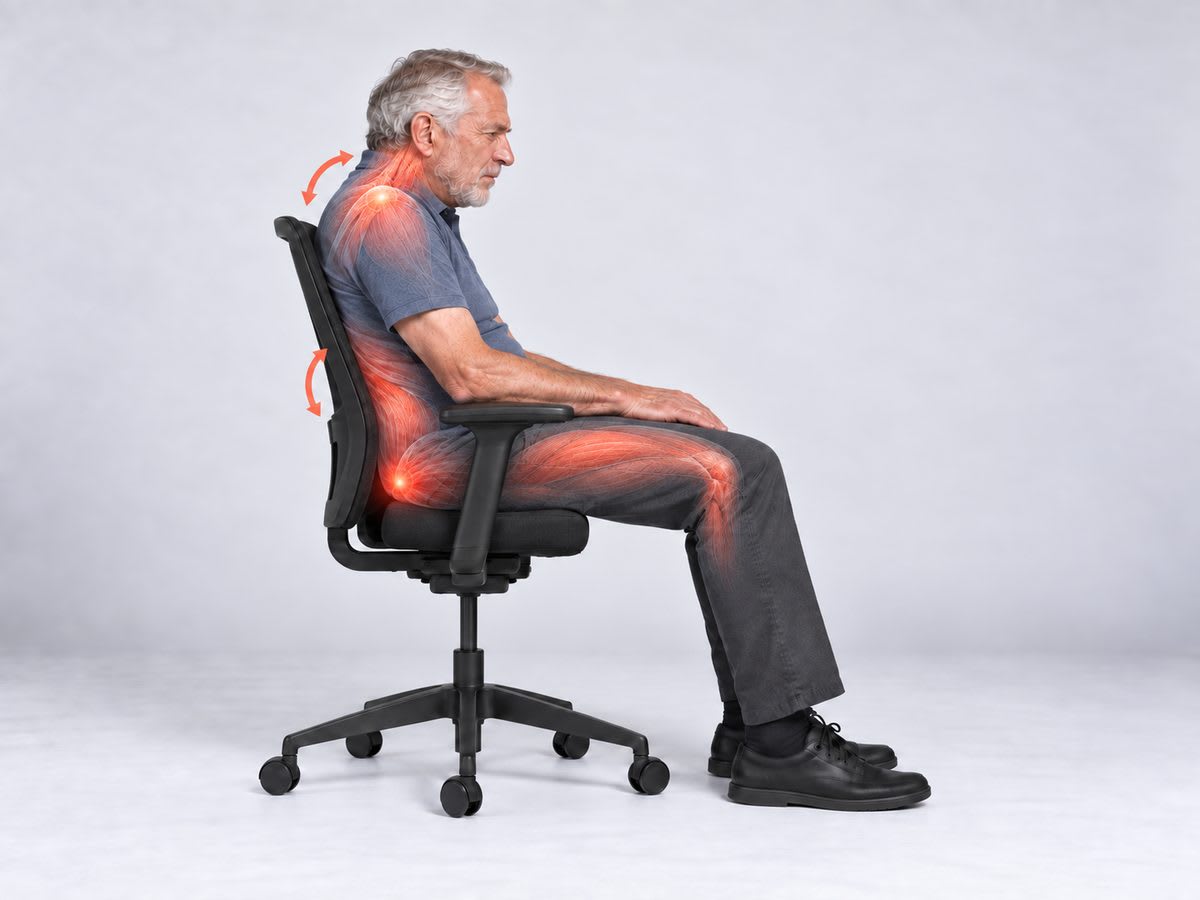
04 Prolonged Static Sitting
Even in a well-designed chair, extended periods in one position can create localized pressure buildup. A chair that limits micro-movement or prevents natural position adjustments over the course of the day can compound discomfort at pressure-sensitive areas like the coccyx.
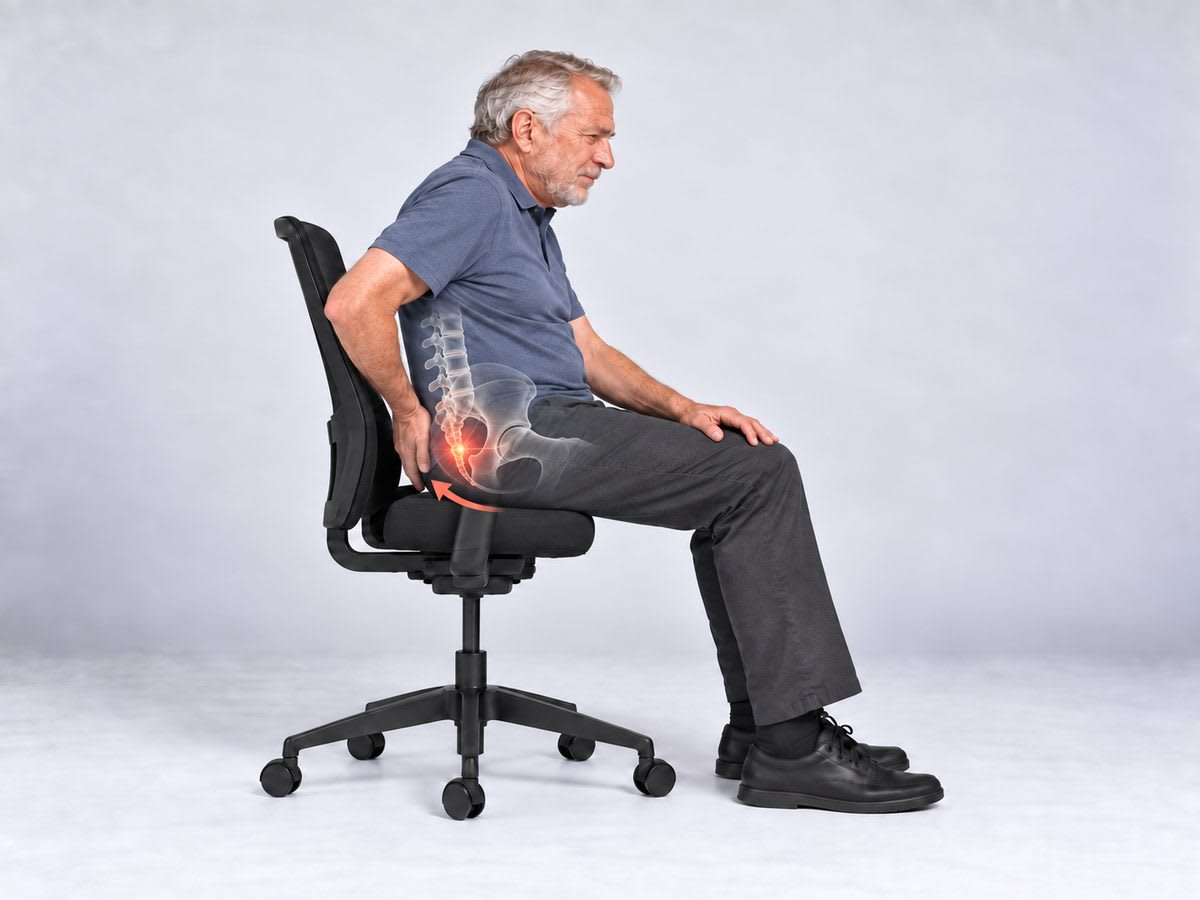
05 Prior Tailbone Injury or Increased Sensitivity
Those who have experienced a coccyx fracture, bruise, or trauma — or who have structural differences in their tailbone anatomy — are often far more sensitive to seat pressure and pelvic position. In these situations, seat design becomes especially consequential.
Why Most Office Chairs Fail People with Tailbone Discomfort
Standard office chairs, including many premium options, are designed for aesthetics, general lumbar support, and initial showroom comfort. They are rarely engineered with seat pressure science in mind:
Most chairs do not actively support a neutral pelvis. Without pelvic support, the pelvis naturally rotates backward during sitting, bringing the tailbone into direct contact with the seat. This is a design flaw, not a personal posture failure.
High peak pressure means localized force concentration. Independent university pressure mapping reveals that most leading office chairs — including the Herman Miller Aeron (184 mmHg) and Embody (168 mmHg) — generate far higher peak pressure at the seat than necessary. Concentrated pressure at the wrong anatomical location is the mechanism behind coccyx discomfort.
Soft cushions feel comfortable for minutes, not hours. A seat that compresses under weight over time loses its ability to distribute pressure evenly, and the tailbone is among the first areas to feel the consequence. What feels good in a showroom may not hold up through an eight-hour workday.
A chair that reclines results in a collapsed pelvis. When the back support leans back, the pelvis loses support, and tilts backward. This leads to increased pressure on the coccyx, resulting in discomfort.
How Anthros May Support You Differently
Anthros was designed by experts in clinical biomechanics and complex seating to address the two things that matter most for tailbone comfort: where the pelvis is positioned, and how pressure is distributed across the seat. This approach may provide a meaningfully different sitting experience for those with coccyx or tailbone sensitivity.
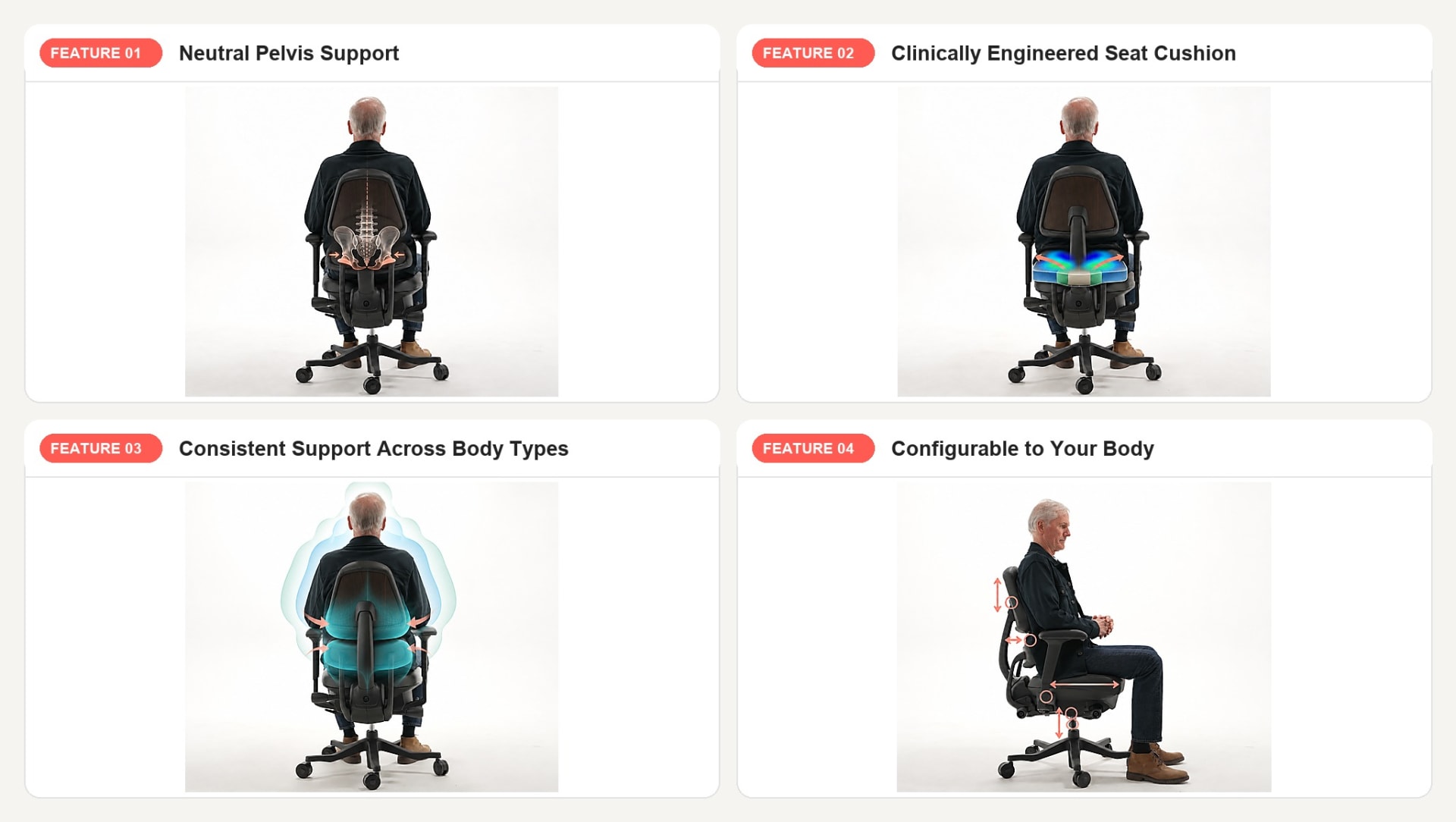
FEATURE 01 — Neutral Pelvis Support — The Mechanism That Matters
Our Precision Posture System is engineered to hold the pelvis in a neutral position throughout the sitting session. When the pelvis is held in neutral, it does not rotate backward, and the tailbone does not sink into the seat surface. Neutral pelvic alignment is the single most important mechanical factor in reducing coccyx pressure during sitting. University of Waterloo real-human testing confirmed our pelvis support was effective in restricting posterior pelvic rotation compared to a leading competitor.
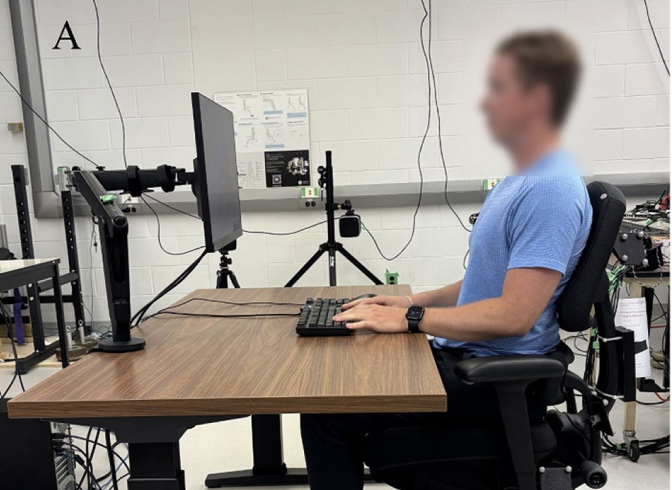
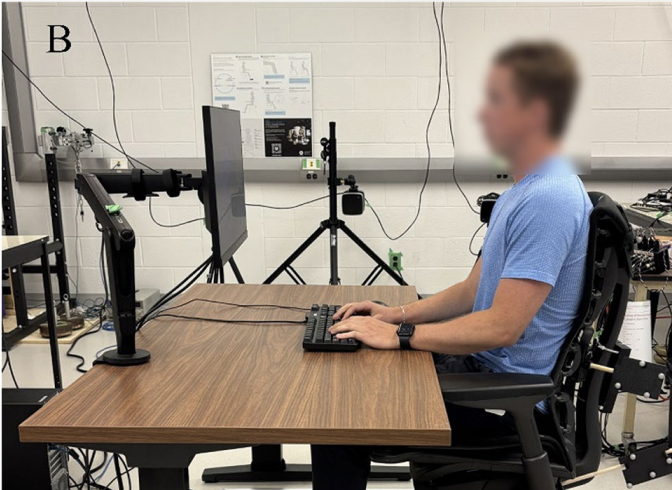
Based on independent testing at the University of Waterloo (2025), 16 participants, measuring spinal posture and seat pressure vs. the Herman Miller x Logitech Embody Gaming Chair.
FEATURE 02 — Clinically Engineered Seat Cushion
The Anthros seat is built with a multi-density cushion system designed to distribute weight evenly across the ischial tuberosities (sit bones), not concentrate it at the tailbone. Independent pressure mapping at the University of Pittsburgh ranked Anthros #1 of 11 leading office chairs in Peak Pressure Index (88.5 mmHg), 52% lower than the Herman Miller Aeron and 67% lower than the Herman Miller Embody.
Based on independent ISO 16840-6 bench testing at the University of Pittsburgh (2025) of 11 leading chairs; peak seat pressure index.
FEATURE 03 — Consistent Support Across Body Types
Internal testing of 10 real people across 8 leading chairs found that Anthros ranked #1 in both lowest average peak pressure (73.7 mmHg) and the narrowest range of peak pressure variation across different bodies (26 mmHg). Most chairs perform inconsistently and Anthros delivers even distribution regardless of your body size or shape.
Anthros is configurable in ways that matter for coccyx comfort: seat depth and height, pelvis and upper back support can all be adjusted to match your body's specific dimensions. Every purchase includes a free Clinical Posture Consult with one of our licensed Physical Therapists or Occupational Therapists, who will ensure your chair is set up to support your individual anatomy.
Validated by independent university pressure mapping (University of Pittsburgh) and real-human spine testing (University of Waterloo). Results may vary. Content is educational and is not medical advice, diagnosis, or treatment.
Common Questions About Tailbone Discomfort and Sitting
Why does sitting cause tailbone pain?
Most chair seats do not actively support the pelvis in a neutral position. When the pelvis rotates backward during sitting, which most chairs allow or even encourage, the coccyx rotates downward and inward, making direct contact with the seat surface. The fix is not a cushion cutout, it is a seat and pelvis support system that prevents the posterior pelvic tilt from occurring in the first place.
What is seat peak pressure, and why does it matter?
Peak Pressure Index (PPI) measures the highest force per unit area at any point on the seat surface. Higher peak pressure means more concentrated force in a localized area. For people with tailbone sensitivity, a seat with high peak pressure at the posterior seat zone can directly aggravate the coccyx. Independent University of Pittsburgh testing found that Anthros achieved a PPI of 88.5 mmHg — 52% lower than the Herman Miller Aeron (184 mmHg) and 67% lower than the Herman Miller Embody (168 mmHg).
Is there an office chair specifically for coccyx pain?
Chairs marketed for coccyx pain often feature a cutout at the back of the seat. While these may provide relief in some cases, they address the symptom rather than the cause. The more effective approach is a chair that holds the pelvis in a neutral position so the tailbone does not bear weight in the first place. Anthros approaches this at the source: pelvis support and low seat pressure distribution, confirmed by independent university testing and real-people pressure mapping.
What should I look for in a chair if I have tailbone discomfort?
Two things matter most: pelvis support and seat pressure distribution. Look for a chair that actively holds the pelvis in neutral, preventing posterior pelvic tilt, and one that has been independently tested for peak pressure performance across different body types. A free Clinical Posture Consult with a licensed therapist who can dial in the chair to your specific anatomy is also valuable, particularly for those with a history of coccyx injury or increased sensitivity.
Can Anthros help with my coccyx discomfort?
We cannot make a guarantee, and Anthros is not a medical device. What we can say: Anthros has the most rigorously tested seat in the industry for pressure distribution, and our pelvis support system has been independently confirmed to restrict the posterior pelvic rotation that brings the tailbone into contact with the seat. We encourage anyone with significant tailbone sensitivity to book a free Clinical Posture Consult with our licensed therapists before purchasing.
Chair A — AnthrosChair B — Herman Miller x Logitech Embody Gaming Chair
The Most Rigorously Tested Seat in the Industry
No other office chair has been subjected to this depth of independent seat pressure testing. Four separate studies — a university bench test, a real-human biomechanics study, internal multi-person pressure mapping, and a public sit-test — all point to the same conclusion: Anthros delivers the lowest, most consistent seat pressure of any chair tested.
University of Pittsburgh — Independent Bench Testing
Using standardized ISO 16840-6 pressure mapping, researchers tested 11 leading office chairs and ranked Anthros #1 with a Peak Pressure Index of 88.5 mmHg — 52% lower than the Herman Miller Aeron (184 mmHg) and 67% lower than the Herman Miller Embody (168 mmHg).
University of Waterloo — Real-Human Biomechanics Study
In a 16-participant study Anthros was compared head-to-head against the Herman Miller x Logitech Embody Gaming Chair. The Anthros pelvis support controlled the amount of posterior pelvic tilt at the start of sitting, supporting postures closer to neutral. Seat pan pressure was also significantly lower in Anthros than Embody in both upright and reclined positions, with better pressure distribution away from the ischial tuberosities and coccyx.
Internal Pressure Mapping — 10 People, 8 Chairs
Across 10 real participants and 8 leading office chairs, Anthros ranked #1 with an average peak pressure of 73.7 mmHg and the narrowest pressure range of any chair tested — just 26 mmHg — meaning consistent results across different body types.
The Comfort Challenge — Public Sit-Test
In a head-to-head public sit-test, 805 of 1,229 participants chose Anthros as their top pick. That's 66.1% of the vote, more than all six competing chairs combined.
The chair's lower support was effective in restricting posterior rotation of the pelvis, facilitating a posture closer to neutral.
— Dr. Jack P. Callaghan, Canada Research Chair in Spine Biomechanics and Injury Prevention, University of Waterloo (2025)
Based on independent ISO 16840-6 bench testing at the University of Pittsburgh (2025) of 11 leading office chairs; peak seat pressure index. Based on independent testing at the University of Waterloo (2025), 16 participants, measuring spinal posture and seat pressure vs. the Herman Miller x Logitech Embody Gaming Chair. Results may vary. Content is educational and is not medical advice, diagnosis, or treatment.
What Anthros Owners with Tailbone Discomfort Are Saying
Results may vary. Content is educational and is not medical advice, diagnosis, or treatment.
4.8 ★★★★★ Based on 495 verified reviews
★★★★★5 weeks ago
I fractured my tailbone years ago and sitting has been a problem ever since. I've tried a dozen chairs, including a coccyx cutout cushion on top of a Herman Miller. The Anthros is the first chair where I can actually work a full day without pain building up by noon. The Clinical Posture Consult was worth it alone — they adjusted my setup to actually work with my anatomy.
David L. Verified buyer
★★★★★2 months ago
I was skeptical about spending this much on a chair for a tailbone issue but nothing else had worked. The difference is how it supports your whole pelvis, not just the cushioning. By the end of week two I was no longer shifting positions every 15 minutes trying to get comfortable. I wish I had found this chair years ago.
Karen M. Verified buyer
★★★★★3 months ago
I work from home as a developer — eight to ten hours a day in a chair. Tailbone discomfort had become a daily problem to manage around. The Anthros changed that. I don't notice the chair anymore, which sounds underwhelming but is actually exactly what you want — it just disappears.
Ryan O. Verified buyer
Results may vary. Content is educational and is not medical advice, diagnosis, or treatment.
Start Your 60-Day Risk-Free Trial
Sit in your Anthros for 60 full days. If it doesn't meaningfully improve your comfort, return it for a full refund. We can offer this because the data is on our side.